Bonusly Alternatives: 6 Things to Look For (and the One Built on Work Pride)
If you run recognition today, you already know the pattern with a points-based program. Launch week is loud. Then participation contracts to the same handful of people, points get spent in end-of-month scrambles, and the automated “happy anniversary” messages start feeling, as one HR leader put it, “almost as meaningful as the yearbooks.”
That’s the honest reason most people search for Bonusly alternatives. Not because Bonusly is broken as a product — it works exactly as designed. The question is whether the design itself is what you want.
What should you look for in a Bonusly alternative? From our experience running recognition programs across 450+ enterprise clients, there are six main factors:
Recognition should survive without a points economy. Can appreciation still happen when there are no points to give? Can it still feel meaningful when there’s no dollar amount attached? If the answer is no, you’re not running a recognition program you’re running a payroll supplement.
The words should stay human. When someone writes appreciation for a colleague, are they writing it or is the platform writing it for them with AI? Does the tool coach specificity, or does it draft the message and ask for a click?
Anyone should be able to recognize anyone, without an approval bottleneck. Can a peer send recognition in the moment, or does everything route through a manager, an executive team, or a nomination workflow? If budget oversight is required, is there a manager-approval flow that doesn’t kill the momentum?
It should live where work happens. Can employees give and receive recognition inside Microsoft Teams, on a mobile app for frontline staff, and tied to HRIS data from Workday or similar without four separate logins?
A small team should be able to start for free, self-serve. Not a 14-day trial. Not “book a demo.” A real free tier with enough seats to run a pilot for a department or a small company, with no sales call required.
You should be able to consolidate recognition, milestones, announcements, and rewards in one place, not five. Recognition in one tool, milestones in a spreadsheet, gift cards from a second vendor, and swag from a third is not a program. It’s chaos with a budget line.
In this article, we’ll walk through howWorkProud our unified recognition and culture platform approaches each of these. Then we’ll cover the rest of the shelf honestly, one to two lines each, so you can compare without wading through seven vendor sites.
If WorkProud looks like a fit, you canstart a free workspace for up to 20 people (self-serve, no sales call) orrequest a demo if you want a walkthrough first.
Bonusly Alternatives Covered in This Article:
WorkProud (in depth)
Nectar
Matter
Assembly
Motivosity
Awardco
Kudos
Guusto
WorkProud
WorkProud was built on a different premise than points-based platforms. The driver is work pride, the meaning of the work itself and rewards are attachable, not required. That difference is the reason a WorkProud program keeps running when a points economy would have decayed.
Factor #1: Recognition anchored in the work itself, to keep participation alive long after a points program would decay
The Bonusly buyer complaint we hear most is not about the catalog. It’s about what happens after month three: participation dwindles to the same six people, allowances expire, and someone burns their balance on Amazon gift cards on the 30th. That decay isn’t a catalog problem. It’s a mechanic problem. When the trigger to recognize is “I have points I need to spend,” recognition becomes transactional by design.
WorkProud starts somewhere else. Recognition is anchored in the work what someone did, why it mattered, how it reflects the company’s values. Rewards can be attached, but they’re never the engine.
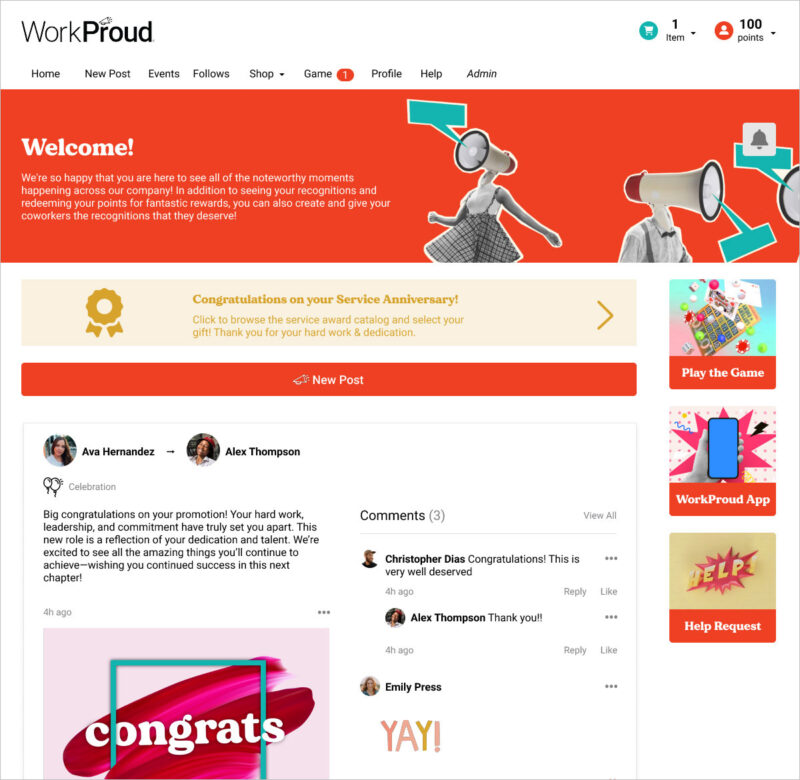
The clearest example is the Bravo Board post type. When someone gives recognition, the composer prompts three questions the writer answers in their own words:
Where do they compliment our vision and mission?
What did they do recently that really stood out?
Why do we celebrate?
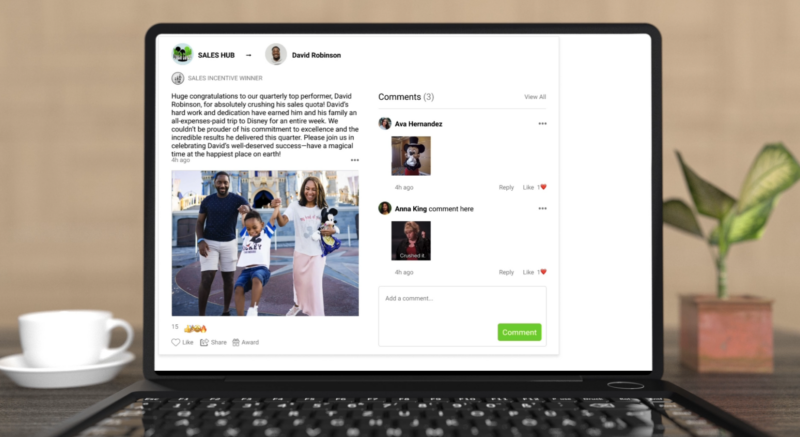
The result is a recognition card that reads like a person wrote it, because a person did. It lands in a feed alongside comments and reactions from colleagues recognition becomes a conversation, not a transaction. The recipient’s face is on the card. The context is specific. And nothing about the post depends on a points balance being non-zero.
Reward-attachment is optional. If a program wants to tie an award to a Bravo, WorkProud supports it — spot awards, milestone gifts, catalog redemption, or even company-supplied options like PTO or payroll credit. But the recognition doesn’t disappear when the reward doesn’t.
For teams asking whether people will still participate without big rewards,our writeup on distributed team recognition covers the mechanics of frequent, low-cost recognition that sustains itself.
Factor #2: Prompted, human-written appreciation, so every recognition sounds like the person who gave it
Bonusly’s product direction has moved toward AI: Bizy the AI assistant, the Gratitude Gauge coaching layer, and a Recognition Quality Score that grades how good a post is. Bonusly’s own launch post describes it as “AI First. Human Always.” The company frames these as amplifiers of human connection.
WorkProud’s stance is different, and it comes from a specific belief: the words are the product. If the platform writes the appreciation, the appreciation isn’t from the person anymore it’s from the platform, sent under the person’s name. Recipients can tell.
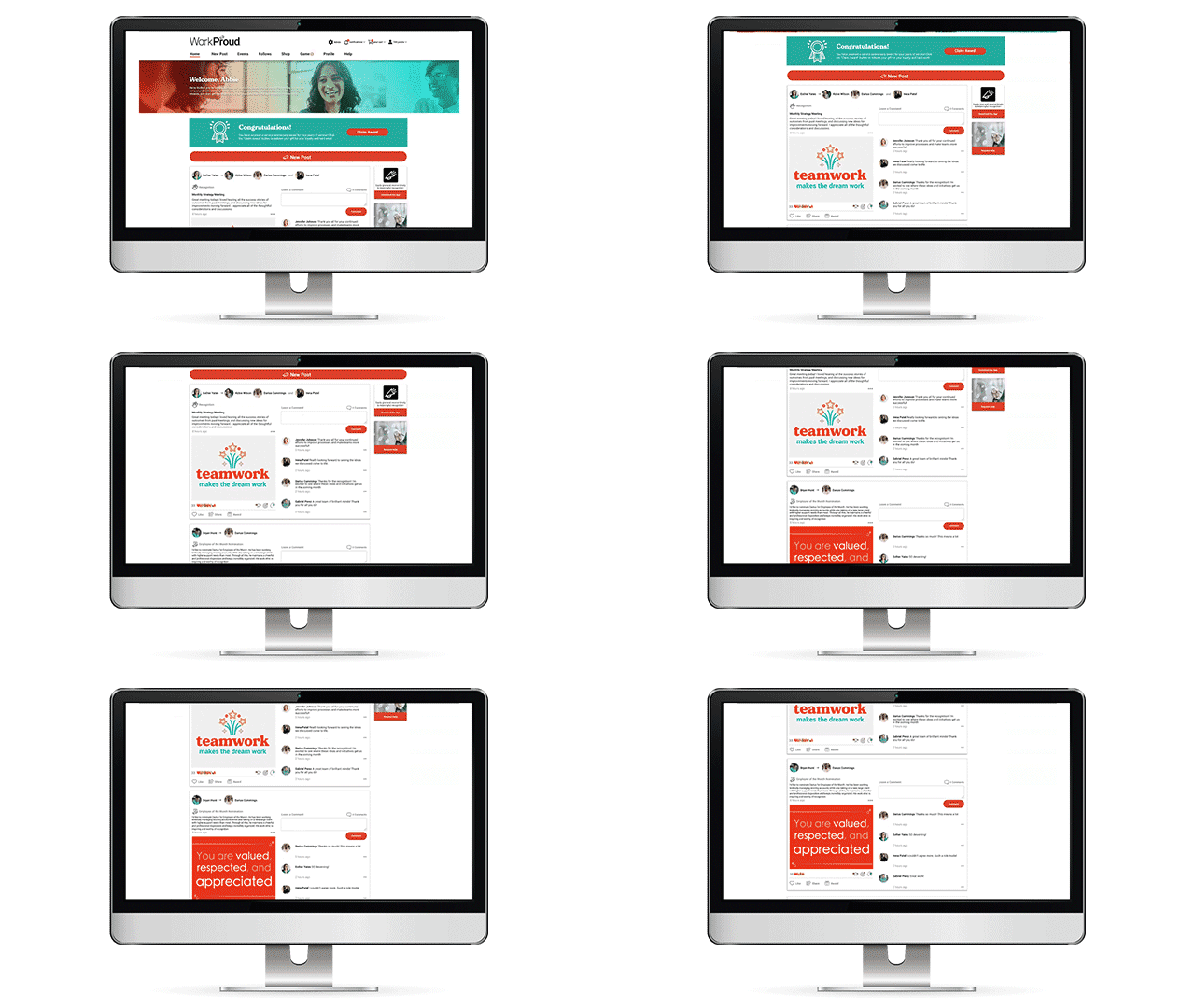
So WorkProud prompts, but it doesn’t draft. The Bravo Board’s three questions guide the writer toward specificity (“What did they do recently that really stood out?”) without generating the answer. Custom Post Types can be configured with your own prompts for values in action, for a safety recognition, for a new hire welcome but the copy comes from the person hitting post.
This is the same reason we cross-link ourEvergrow alternatives writeup [VERIFY: exact Evergrow Alternatives URL] teams evaluating any recognition platform in 2025 need to decide, up front, whether they want appreciation authored by their people or generated for them.
For a recognition program owner, this matters most in the artifacts. When you pull a year of recognition history before a QBR, you want the record to be your culture speaking, not a language model paraphrasing it.
Factor #3: Anyone-anytime recognition with optional approval flows, to celebrate the moment without losing budget oversight
Two direct quotes from HR program owners we’ve talked to:
“Everything is required by our ET.”
“Our internal nomination tool requires a lot of approvals.”
That’s what happens when a recognition system is built around governance first and empowerment second. Peer-to-peer exists on the marketing page, but in practice every meaningful moment routes through an executive team or a nomination review, and by the time it’s approved the moment is gone.
WorkProud is anyone-anytime by default. A peer can post a Bravo, a Celebration, a Recognition, or an Accomplishment directly to a colleague or group without asking permission. The composer opens, the post goes to the feed, and reactions and comments start immediately.
For programs that need budget oversight spot awards tied to a dollar value, for instance WorkProud supports an optional manager-approval flow. You get the guardrails without turning every “great job on the launch” into a workflow. Budgets are governed at the program level (per-user allowances, monthly caps, approval thresholds you set), so finance stays comfortable and peers stay unblocked.
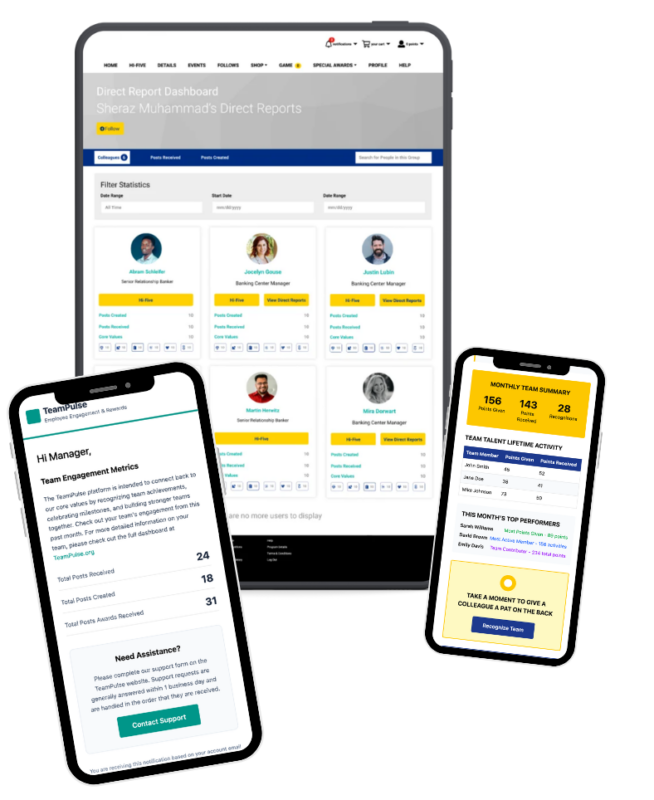
Factor #4: Teams, Workday, and mobile integrations, to run recognition where your people already work
A quote we keep hearing from HR leaders considering consolidation:
“If it could all be in one place and integrated with either Teams or Workday, that is on my ask list.”
That’s the shape of the ask. Not another point solution. One system that lives where work happens.
WorkProud handles this in three layers:
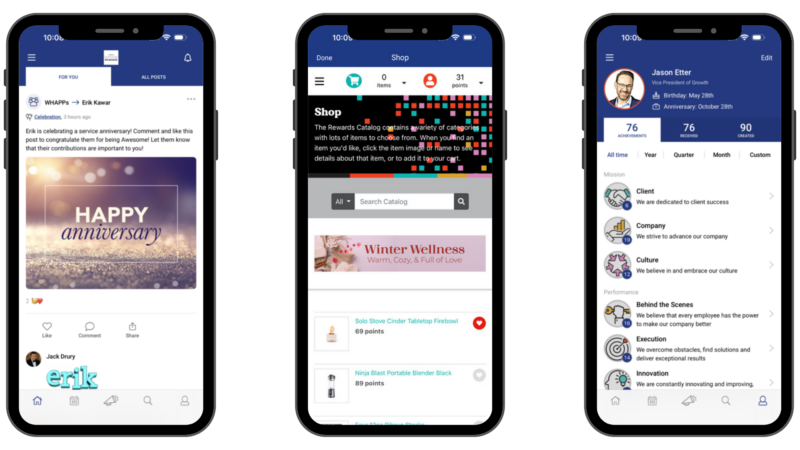
In the flow of work. Recognition posts can be surfaced in Microsoft Teams alongside conversations, so employees see and give recognition without switching apps. [VERIFY: current list of collaboration integrations, e.g., Slack, Teams, SharePoint]
Wired to your source of truth. HRIS integration (Workday, SAP SuccessFactors, and other major systems) drives the employee directory, milestone dates, org hierarchy, and access so you’re not maintaining a second employee list. SSO through Okta and similar identity providers is standard.
On mobile for frontline staff. Native iOS and Android apps mean deskless employees who make up roughly 80% of the global workforce can give and receive recognition from their phones, in their language.
Everything sits under one hub: Bravo Board posts, service anniversaries with personalized banners, spot awards, announcements, celebrations, referrals, and the rewards catalog when you want one. One login. One reporting layer. One place to point people when they ask “where do I go to recognize someone?”
Factor #5: A free 20-person workspace, to prove recognition works on your own team before you spend a dollar
This is where the money conversation gets specific.
Bonusly’s Free plan caps at 8 users and covers peer recognition, Slack and Teams integrations, and the mobile apps. To get past 8 users, you move to the Team plan, which starts at $3.00 per user per month according to Capterra (September 2026), with the rewards budget billed separately on top of the platform fee. Any redemption from the catalog is billed at face value. Bizy AI is included on paid plans and can be toggled off. For a 200-person team, that’s roughly $600/month in platform fees before you fund a single reward and the rewards budget compounds per user as you grow.
WorkProud starts free for up to 20 users, self-serve, no sales call. You sign up, you get a working recognition experience: Bravo Board, feed, celebrations, announcements, mobile apps. When you’re ready to grow, you upgrade same system, more capability, no migration.
For HR departments of one who want to try recognition without the points economy on their own team before sitting through anyone’s demo, that’s the point. Run it for 30 days with a real group of people and see whether recognition sustains itself when the mechanic is pride, not points.
Note on total cost of ownership: platform fee plus rewards budget is the honest math for any points-based tool, and it compounds per user. A checklist item worth adding to any RFP is: at our headcount in 12 months, what’s the all-in monthly spend, including rewards, and how does it scale?
Factor #6: One platform for recognition, milestones, and rewards, to replace five vendor logins with one budget and one reporting layer
Before building WorkProud, our team spent years running recognition programs inside Fortune 500 companies. The pattern was consistent. HR would launch a recognition tool, then add a separate milestone vendor for service anniversaries. Then a gift card provider for spot awards. Then a swag company for onboarding kits. Then a wellness points system. Then a Slack channel called #kudos because none of the above felt fast enough.
Come reporting time, we used to pull data from five different vendor portals, reconcile it in Excel, chase down milestone approvals by hand, and stitch together a QBR narrative that argued for keeping any of it funded. It took days. Half the data didn’t line up. And the employee experience of the whole thing was scattered across five logins.
We know from firsthand experience this is a duplicate-effort process with no upside for the people the programs exist to serve. When we built WorkProud, we designed it so an HR program owner can run all of it Bravo Board recognition, service milestones with personalized banners, spot awards, referral programs, wellness campaigns, announcements, and the rewards catalog from one place, under one budget, with one reporting layer.
For example, say you’re preparing a quarterly business review for your CHRO and want to show which teams are being recognized most, which values are showing up in recognition content, which managers are participating, and how milestone spend is tracking against budget. In a fragmented stack, that’s a week of exports and pivot tables. In WorkProud, it’s a dashboard.
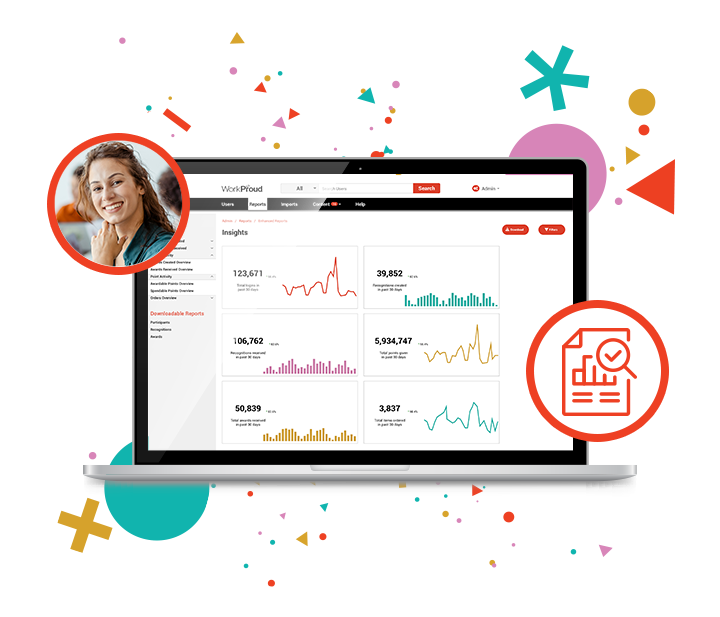
The Enhanced Reports view answers “is it working?” with numbers, not anecdotes: logins, recognitions created and received, awards, points given, and orders, each with a 30-day trend. The same view offers downloadable participant and recognition reports, which is what turns the quarterly business review from opinions into a data conversation.
The consolidation isn’t a marketing pitch it’s what makes the program defensible when budgets tighten.
A fair roundup covers the whole market, not just the vendor writing the article. Here are the other platforms most often evaluated alongside Bonusly, with the honest one-liner on each.
Nectar
Nectar is a mid-market recognition and rewards platform with a points-based core, a challenges module, and an Amazon-backed catalog. Reasonable fit if you want a lower-cost Bonusly-shaped product. If you’re comparing Nectar specifically, we wrote a deeper breakdown:4 Best Nectar Alternatives.
Matter
Matter is a Slack-native peer recognition tool with kudos, feedback prompts, and a coin-based reward system. Strongest when your workforce lives entirely in Slack and you want lightweight peer appreciation without much program governance.
Assembly
Assembly bundles recognition, employee communication, and workflow templates into one app. It’s a decent consolidation play for small teams, though the recognition experience is lighter than dedicated platforms and depth on milestones is limited.
Motivosity
Motivosity emphasizes peer-to-peer recognition, manager development tools, and a “ThanksMatters” card for reward delivery. Points-based like Bonusly, with more focus on manager coaching. For a direct comparison, see ourMotivosity walkthrough.
Awardco
Awardco leans heavily on catalog breadth via an Amazon Business partnership and a “no markups” pricing narrative. Best fit if your priority is reward variety and global fulfillment; the tradeoff is that the platform is built around the transaction, so cultural storytelling is thinner.
Kudos
Kudos is a social recognition platform with pre-built templates, nomination programs, and milestone celebrations. Straightforward to launch and manage, though the experience is more standardized than configurable. See ourKudos comparison writeup for more.
Guusto
Guusto is built for frontline and deskless workforces, with free accounts that don’t require a corporate email and multi-channel gift delivery. Genuinely useful for retail, hospitality, and hourly teams; less suited to complex enterprise governance or HRIS-driven programs.
What to Evaluate in Any Bonusly Alternative
If you’re heading into an RFP or a vendor shortlist, these criteria can double as your requirements list. Teams often paste them directly into scoring rubrics:
Does recognition survive without points? Ask for a demo of a program running with zero reward attachment. If the platform feels empty, that tells you what the mechanic actually is.
Who can give recognition, and does it require approval? Anyone-anytime should be the default. Approval flows should be optional and scoped to spend, not to sentiment.
Where does recognition live? In Teams, in a mobile app, on the intranet, in the HRIS feed or in a standalone portal employees have to remember to visit?
Are the words human or AI-generated? Ask to see the composer. If the platform drafts the message, decide whether that’s what you want representing your culture.
What does it cost at your headcount in 12 months? Platform fee plus rewards budget, compounded per user. Include a free-tier option for pilots.
Can it consolidate milestones, announcements, referrals, and wellness — or is it recognition only? If the plan is one integrated home, ask what else lives there.
Will people still participate without big rewards?
Yes, and participation usually gets healthier. When rewards are the trigger, recognition rises and falls with the points budget. When the trigger is the work itself, appreciation keeps flowing and a reward attached to it lands as a bonus rather than the reason. As one recognition leader put it on a call with our team, points feel more valuable when they arrive on top of a genuine thank-you instead of being the whole gesture. The free WorkProud tier exists so you can test this on your own team for 30 days instead of taking our word for it.
Can we move off Bonusly without losing our recognition history?
Your people and structure come over easily: WorkProud syncs your employee directory, milestone dates, and org hierarchy from your HRIS, so day one starts with a full roster, not a blank workspace. [VERIFY WITH JASON: whether historical recognition posts from a previous platform can be imported, and what the export-from-Bonusly step looks like.] Either way, plan the switch at a natural boundary like a quarter or program-year start, so outstanding point balances get spent down before the cutover.
What does Bonusly actually cost at a 200-person company?
More than the sticker price. The Team plan runs $3.00 per user per month without Bizy AI, or $5.00 with it, so 200 people is $600 to $1,000 a month in platform fees before a single reward is funded. The rewards budget is billed separately at face value, and depending on the billing plan you choose, a 5% to 8% convenience fee can apply on top. The honest comparison for any points-based tool is platform fee plus rewards budget plus fees, compounded per user as you grow.
What is the best alternative to Bonusly?
It depends on which problem you’re solving. If you want a different points catalog, Nectar, Awardco, and Motivosity are credible points-based options. If the problem is the points mechanic itself, appreciation that decays into transactions, WorkProud is the alternative built on a different premise: recognition anchored in work pride, written by humans, with rewards optional. Teams that want to test that premise can run WorkProud free for up to 20 people, self-serve.
Try Recognition Without the Points Economy
The fastest way to know whether a recognition program built on work pride works for your team is to run it for 30 days on a real group of people. Not a sandbox. Not a demo environment. Your actual colleagues, giving actual appreciation, in their own words.
Start a free WorkProud workspace for up to 20 people. Self-serve. No sales call. If you’d rather see it walked through first,request a demo and we’ll show you a program that looks like yours.
Ray-Ban Meta Wayfarer Smart Glasses Matte Black/Clear-Graphite Green Transitions
Product Details
An icon of style from Hollywood to hip-hop, the Wayfarer never stands still. Forever embraced by the next generation of culture makers, now its journey continues with AI-enhanced wearable tech. Ray-Ban Meta Wayfarer enables you to live in the moment and share how you see the world. Listen, call, capture and livestream features are seamlessly integrated within the classic frame. Eye size: 50; Frame: Matte Black; Lens: Clear/Graphite Green Transitions; Lens Material: Standard Plastic
Specifications
Color: Matte Black/Clear-Graphite Green Transitions
Here you will find insights curated for leadership seeking in-depth industry knowledge. Explore comprehensive studies, helpful guides, and expert white papers.
*By selecting “VIEW RESOURCES,” you agree to WorkProud’s Privacy Policy. You may unsubscribe from our emails at any time. Please note when unsubscribing: it may take up to 10 business days for your request to take effect.