


Burdened by intense workloads and pay concerns, workers in the healthcare industry are among the most stressed — and most likely to quit. The result? Healthcare organizations lose millions of dollars every year in turnover costs, and the frontline workforce absorbs the impact.
But here’s what makes healthcare turnover different from other industries: 70% of the workforce never sits at a desk. Nurses, CNAs, environmental services workers, dietary staff, the people who keep hospitals running, work rotating shifts, nights, and weekends. They’re often the last to be seen by leadership and the first to leave when they feel invisible.
Research shows that cultivating a positive healthcare workplace culture — one in which workers feel appreciated for their efforts — can counterbalance the many inherent pressures of healthcare work. WorkProud’s analysis of a large healthcare client found that employees were 70% more likely to resign when not consistently recognized. Gallup and Workhuman research confirms that employees receiving high-quality recognition are 45% less likely to leave within two years.
The question isn’t whether recognition works. It’s whether your recognition program can actually reach the people most at risk of leaving.
Although turnover has slowed since the height of the pandemic, rates of healthcare turnover still rank among the highest of any industry. The 2025 NSI National Health Care Retention & RN Staffing Report estimates that replacing a single nurse costs between $49,500 and $72,700. Each percentage point change in RN turnover costs the average hospital approximately $262,500 to $289,000 per year. Several forces are driving these numbers, and each one disproportionately affects frontline, shift-based workers.
The lingering impact of the pandemic. During COVID, public praise kept many healthcare workers motivated despite immense pressure. After that wave of appreciation subsided, employees started to feel undervalued and forgotten. Turnover still hasn’t returned to pre-COVID levels, reflecting a long-term shift in worker satisfaction, especially among frontline caregivers who feel their daily sacrifices go unacknowledged.
Chronic worker shortages and burnout. By 2028, the country is projected to be short of over 100,000 healthcare workers. Coupled with an aging population, this puts tremendous strain on existing staff. Recent CDC research found that nearly half of health workers often feel burned out. When caregivers feel unseen, when their effort during a 12-hour shift goes unacknowledged, burnout deepens.
Pay concerns and sign-on bonus fatigue. Healthcare workers continue to rank among the least satisfied with their pay. Many organizations have leaned on sign-on bonuses as the primary retention lever, but bonuses solve the recruitment problem, not the retention problem. They get people in the door. They don’t give them a reason to stay.
The deskless worker gap. As remote work grows in the broader professional world, deskless medical workers face a different kind of dissatisfaction: not whether they can work from home, but whether anyone notices the work they do. Most recognition programs, HRIS modules, and engagement tools were designed for desk-based employees. The night shift nurse, the weekend CNA, the environmental services worker. They’re structurally excluded from programs that require desktop access, manager nominations, or scheduled ceremonies.
Combating high turnover requires cultivating a positive workplace culture, one where workers feel valued, appreciated, and engaged. Several strategies can move the needle, and the most effective organizations use them in combination.
Wellness initiatives address the physical and mental toll of healthcare work. Subsidized gym memberships, stress management workshops, and mandated breaks are baseline protections that signal an organization cares about its people.
Professional development is a powerful retention lever. Over half of healthcare workers surveyed by Gallup said they were interested in upskilling. Leadership training, tuition reimbursement, and certification assistance help employees feel invested in their organization’s future.
Competitive compensation remains a necessary investment. Salaries must keep pace with industry benchmarks, and retention bonuses, performance incentives, and competitive PTO help organizations stay competitive in a tight labor market.
Work-life balance improvements are becoming more common in corporate settings but remain among the least prevalent strategies in healthcare. Flexible scheduling technology, telehealth for routine visits, and collaborative shift management can boost satisfaction. The Oschner Health System in Louisiana saw physician satisfaction increase 30% after implementing flexible scheduling.
Each of these strategies serves a purpose. But none of them solve the core problem driving frontline attrition: the feeling of being invisible.
That’s where employee recognition comes in — not as one strategy among many, but as the infrastructure layer that makes all the others land. A wellness program tells employees you care about their health. A recognition program tells them you see their work. And for the 70% of your healthcare workforce on rotating shifts, that visibility is the difference between staying and leaving.
Among the various retention strategies, employee recognition is uniquely powerful — and uniquely broken in healthcare.
It’s powerful because recognition addresses the emotional core of why people stay: feeling valued for the work they do every day, not just at annual ceremonies. Studies reveal that recognition programs are often more effective at reducing attrition than pay increases or bonuses — particularly in healthcare, where workers tend to be motivated by purpose and belonging more than compensation alone.
It’s broken because most healthcare recognition programs were designed for a workforce that sits at desks, reports to visible managers, and operates on predictable schedules. The night shift nurse who stayed late to comfort a patient’s family. The CNA who calmed a confused resident during a crisis. The environmental services worker who turned a room in record time so another patient could be admitted. These moments happen when no one in leadership is watching — and current recognition infrastructure has no way to capture them.
One customer described it this way: “They feel separate from the rest of the organization. They are the hidden warriors.”
For recognition to actually reduce turnover in healthcare, it must be redesigned around how frontline teams work — on their feet, on their phones, across shifts that never overlap. That means three things need to change:
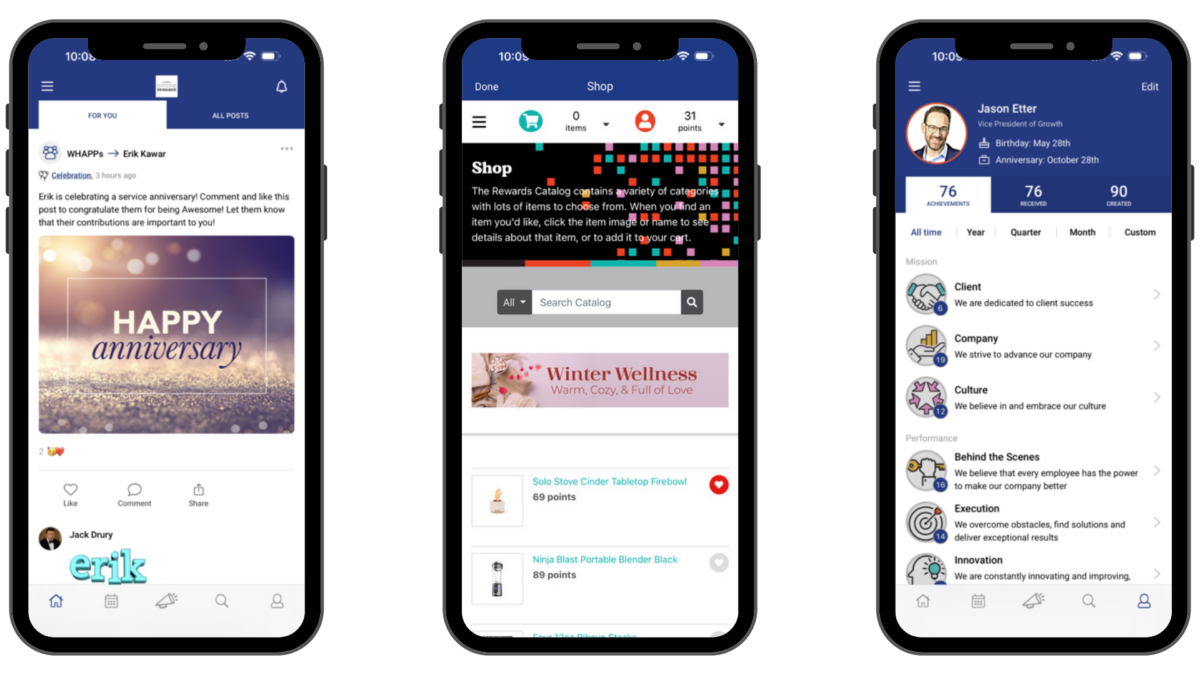
Recognition must be mobile-first. If it’s not on a caregiver’s phone, it doesn’t exist for them. Desktop-first platforms structurally exclude the majority of the healthcare workforce. A native mobile app with full feature parity and push notifications means a night shift nurse can recognize a colleague from her phone between patients. Real-time. Accessible on break, before clocking out, or between rounds. WorkProud’s native mobile app carries a 4.9 app store rating and was built specifically for workforces that don’t sit at desks.
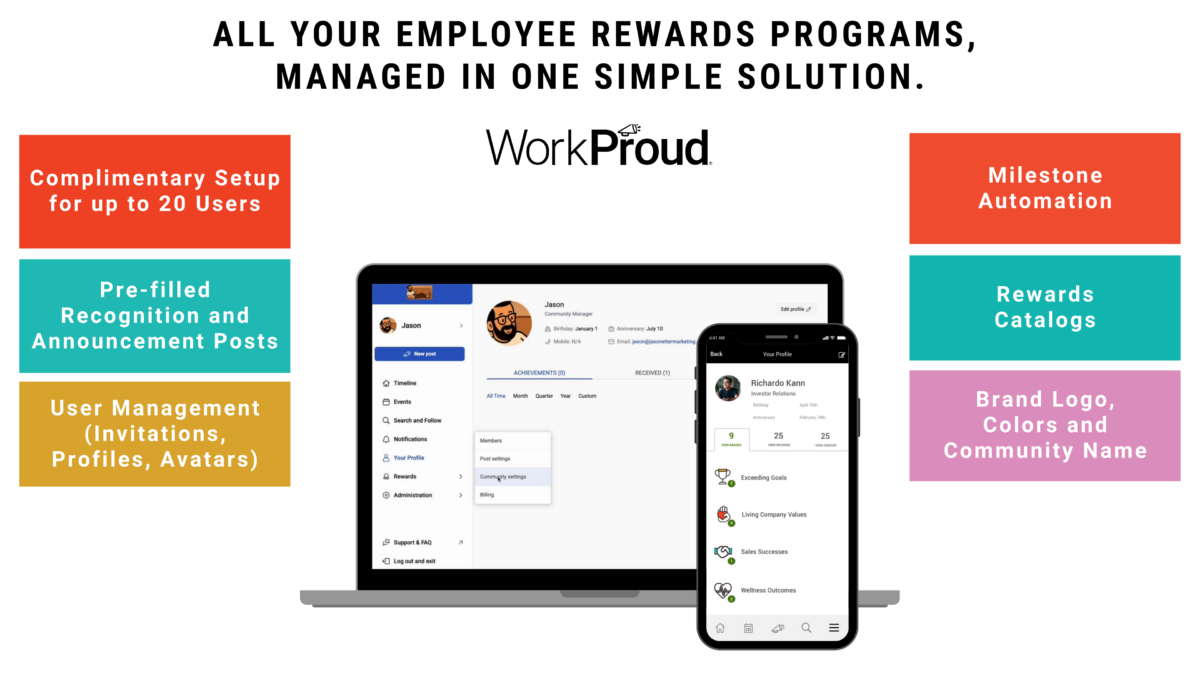
Recognition must be peer-driven, not manager-gated. Healthcare runs on shift-based pods. The trust and relationships live within these teams, not between frontline workers and distant managers. When recognition requires a nomination form, a manager signature, or an executive committee review, the friction kills volume and the moments that matter get lost. Peer-to-peer recognition flips the model: anyone recognizes anyone, in real time, tied to a company value. WalkMe, a WorkProud client, went from 140 recognition moments per year under a manager-only model to over 11,000 with peer-to-peer, sustaining 87% platform participation over four years. As their HR lead described it: “That has been the big game changer — it puts not just the recognition, but the reward in the hands of the employees.”
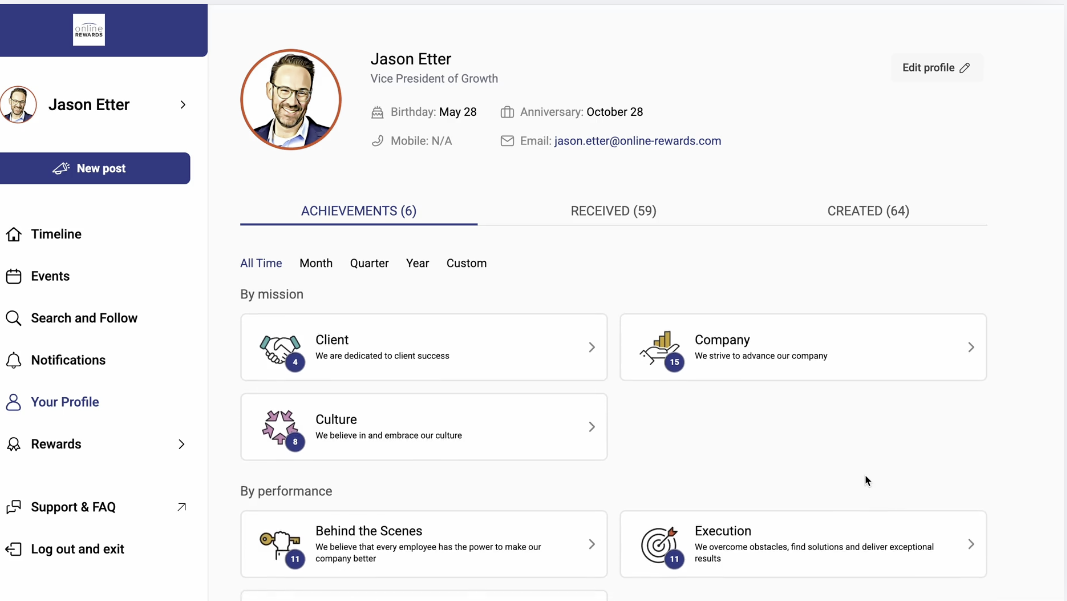
Recognition must generate data you can act on. Without measurement, recognition is a cost center. With measurement, it becomes a retention strategy. Dashboards that track recognition frequency by unit, shift, department, and core value give you leading indicators of culture health. If your ICU has high peer recognition and low turnover, and your ER has low recognition and high turnover, that’s actionable intelligence, not vibes. WalkMe’s engagement scores increased 130% over four years, and their reward scores increased 50% during a major merger, without retention bonuses. Their HR leader’s assessment: “My budget’s gone down every year. And yet these numbers are going up.”
If recognition is the operational key, the next question is: how do you build it for a shift-based workforce? Here are five practical steps, each one informed by what actually works in healthcare settings.
The first step is understanding the needs and preferences of your talent base, especially the employees furthest from leadership’s line of sight. What types of recognition do shift workers value? What makes them feel seen? Most healthcare organizations skip this step and default to what works for desk-based staff. The answers you get from night shift CNAs will be different from what you hear from department heads.
The next step is pinpointing behaviors and actions worth recognizing and ensuring frontline workers can flag them in the moment. In healthcare, that means going beyond annual milestones:
The key: these behaviors happen on the floor, not in meetings. Your recognition infrastructure must let the person who witnessed the moment capture it from their phone, in real time.

Ensuring that recognition is frequent, timely, and equitable across a shift-based workforce is not something spreadsheets, email, or HRIS bolt-ons can handle. A purpose-built platform makes the difference. What to look for:
WorkProud’s platform was built for exactly this context. The managed service model, WorkProud Delivered, handles branding, HRIS integration, staff training by role, communication rollout across shifts, adoption monitoring, and quarterly business reviews. WorkProud maintains a 98% customer satisfaction rate and 96% client retention across 450+ programs because they co-own the outcome.
The most successful programs incorporate both. Financial rewards (point-based catalogs, gift cards, bonuses) are meaningful in an industry where pay concerns are persistent. But verbal recognition, peer acknowledgment, and public celebration build belonging in a way that money alone can’t accomplish.
The combination matters. When WalkMe implemented WorkProud’s peer-to-peer platform with integrated rewards, their recognition volume went from 140 to 11,000+ moments per year. The financial investment decreased year over year while engagement scores rose because the system created a culture of recognition, not just a rewards program.
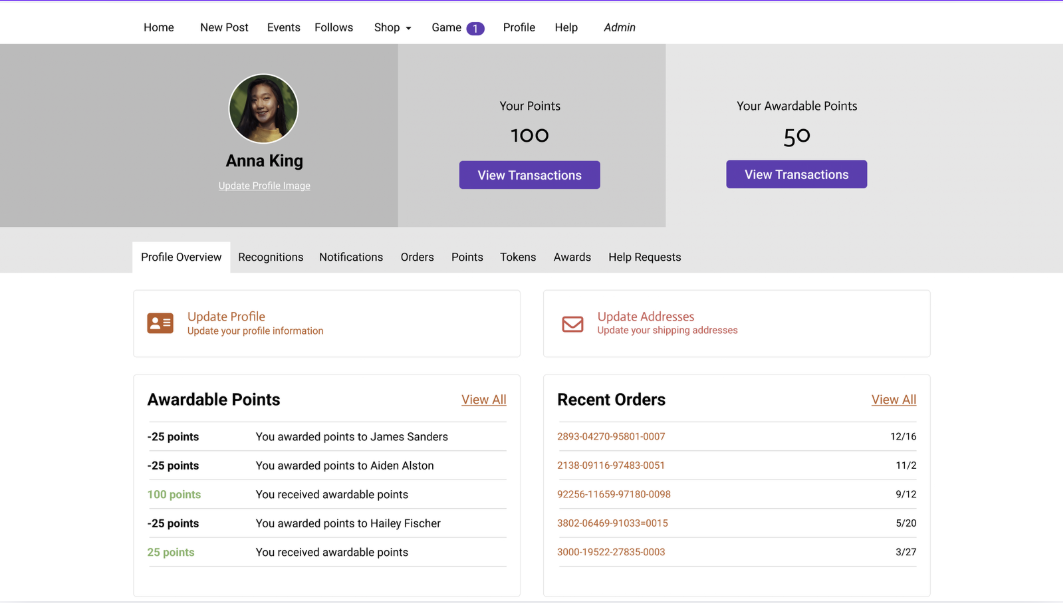
Recognition without measurement is a budget line item. Recognition with measurement is a retention strategy your CFO can get behind. Track participation rates by department, shift, and role. Monitor which values are being reinforced and which are being ignored. Correlate recognition data with turnover trends. Present the numbers. At a 2,000-person healthcare system, each percentage point change in nursing turnover costs approximately $262,500 to $289,000. A recognition program that moves the needle even modestly produces outsized returns, and with the right analytics, you can prove it.
Jersey City Medical Center, an affiliate of RWJBarnabas Health, illustrates what this shift looks like in practice. They replaced their traditional “Employee of the Month” program with “Recognizing You,” a structured recognition program designed by WorkProud.
The new program combined monetary recognition through a point-based reward catalog with non-monetary peer-to-peer recognition and service awards, all tied to organizational values. Frontline staff could recognize colleagues in real time, leadership gained visibility into culture patterns across departments, and the program produced measurable improvements in both employee engagement and quality of patient care.
The lesson: the shift from a legacy recognition format to a structured, technology-enabled program didn’t require starting from scratch. It required building the right infrastructure around the recognition behaviors that were already happening informally and making them visible, measurable, and accessible to every employee, regardless of shift or role.
As you evaluate how to strengthen recognition at your organization, these criteria can help you distinguish programs that work for desk-based teams from infrastructure that works for healthcare:
Accessibility: Can every employee participate, including night shift nurses, weekend CNAs, and staff without regular computer access? Or does participation require a desktop login and manager involvement?
Frequency and real-time capture: Can recognition happen in the moment, on the floor, between patients, during a shift handoff? Or is it limited to scheduled ceremonies and delayed nomination cycles?
Peer-to-peer mechanics: Can colleagues recognize each other directly, or is every recognition gated through management? In healthcare, the person who witnessed the moment is usually a peer, not a manager.
Data and measurement: Can you track recognition by unit, shift, and value and connect it to engagement and turnover trends? Or are you operating on what one HR leader called “vibes and email sends”?
Implementation support: Does your vendor handle HIPAA compliance, HRIS integration, shift-based training, and adoption tracking? Or is rollout your team’s problem to solve with limited IT bandwidth?
There’s a reason many of the country’s top healthcare systems choose WorkProud to reduce turnover and improve employee satisfaction. The combination of a mobile-first platform, peer-to-peer recognition, real-time analytics, and managed implementation support was built for the complexity of healthcare, where shift-based workflows, HIPAA compliance, and deskless workforces make generic solutions inadequate.
If your current recognition program isn’t reaching the night shift nurse, the weekend CNA, or the environmental services worker who keeps your facility running, it’s time to build infrastructure that does.
See how healthcare systems like yours are building recognition for shift-based teams. Talk to an expert →

WorkProud is committed to helping its clients create a unified approach to the employee experience by helping them build cultures of workplace pride. Trusted by millions of users at some of the world’s most recognized employer brands, WorkProud delivers a comprehensive approach to building company cultures that inspire people to be Proud of their Work and Proud of their Company.
An icon of style from Hollywood to hip-hop, the Wayfarer never stands still. Forever embraced by the next generation of culture makers, now its journey continues with AI-enhanced wearable tech. Ray-Ban Meta Wayfarer enables you to live in the moment and share how you see the world. Listen, call, capture and livestream features are seamlessly integrated within the classic frame. Eye size: 50; Frame: Matte Black; Lens: Clear/Graphite Green Transitions; Lens Material: Standard Plastic
Color: Matte Black/Clear-Graphite Green Transitions
A
Afghanistan
Albania
Algeria
Andorra
Angola
Antigua & Deps
Argentina
Armenia
Australia
Austria
Azerbaijan
B
Bahamas
Bahrain
Bangladesh
Barbados
Belarus
Belgium
Belize
Benin
Bhutan
Bolivia
Bosnia Herzegovina
Botswana
Brazil
Brunei
Bulgaria
Burkina
Burundi
C
Cambodia
Cameroon
Canada
Cape Verde
Central African Rep
Chad
Chile
China
Colombia
Comoros
Congo
Congo {Democratic Rep}
Costa Rica
Croatia
Cuba
Cyprus
Czech Republic
Denmark
D
Djibouti
Dominica
Dominican Republic
E
East Timor
Ecuador
Egypt
El Salvador
Equatorial Guinea
Eritrea
Estonia
Ethiopia
F
Fiji
Finland
France
G
Gabon
Gambia
Georgia
Germany
Ghana
Greece
Grenada
Guatemala
Guinea
Guinea-Bissau
Guyana
H
Haiti
Honduras
Hungary
I
Iceland
India
Indonesia
Iran
Iraq
Ireland {Republic}
Israel
Italy
Ivory Coast
J
Jamaica
Japan
Jordan
K
Kazakhstan
Kenya
Kiribati
Korea North
Korea South
Kosovo
Kuwait
Kyrgyzstan
L
Laos
Latvia
Lebanon
Lesotho
Liberia
Libya
Liechtenstein
Lithuania
Luxembourg
M
Macedonia
Madagascar
Malawi
Malaysia
Maldives
Mali
Malta
Marshall Islands
Mauritania
Mauritius
Mexico
Micronesia
Moldova
Monaco
Mongolia
Montenegro
Morocco
Mozambique
Myanmar
M
Namibia
Nauru
Nepal
Netherlands
New Zealand
Nicaragua
Niger
Nigeria
Norway
O
Oman
P
Pakistan
Palau
Panama
Papua New Guinea
Paraguay
Peru
Philippines
Poland
Portugal
Q
Qatar
R
Romania
Russian Federation
Rwanda
S
St Kitts & Nevis
St Lucia
Saint Vincent & the Grenadines
Samoa
San Marino
Sao Tome & Principe
Saudi Arabia
Senegal
Serbia
Seychelles
Sierra Leone
Singapore
Slovakia
Slovenia
Solomon Islands
Somalia
South Africa
South Sudan
Spain
Sri Lanka
Sudan
Suriname
Swaziland
Sweden
Switzerland
Syria
T
Taiwan
Tajikistan
Tanzania
Thailand
Togo
Tonga
Trinidad & Tobago
Tunisia
Turkey
Turkmenistan
Tuvalu
U
Uganda
Ukraine
United Arab Emirates
United Kingdom
Uruguay
Uzbekistan
V
Vanuatu
Vatican City
Venezuela
Vietnam
Y
Yemen
Z
Zambia
Zimbabwe
Here you will find insights curated for leadership seeking in-depth industry knowledge. Explore comprehensive studies, helpful guides, and expert white papers.
*By selecting “VIEW RESOURCES,” you agree to WorkProud’s Privacy Policy. You may unsubscribe from our emails at any time. Please note when unsubscribing: it may take up to 10 business days for your request to take effect.