


Your distributed workforce is growing. So is the gap between how you recognize in-office employees and everyone else.
Remote and hybrid workers report lower connection to company culture and higher intent to leave than their co-located peers.
Metric | Exclusively Remote | Hybrid | Fully On-Site | Source |
Feel Connected to Culture/Mission | 28% | 35% | 33% | |
Intent to Leave (Seeking Job) | 57% | 57% | 45% | |
Feel Excluded from Meetings | — | 60% | — | |
Culture Energy Score | 64% | 66% | — |
The common explanation is that distance creates disengagement. But the more operational explanation is this: the recognition tools most organizations rely on were built for teams that share a hallway, and they break down the moment your workforce doesn’t.
If your recognition strategy depends on Slack shoutouts, manager-initiated awards, or the recognition module inside your HRIS, you already know something isn’t landing. The recognition is happening. The data, visibility, and cultural connection across your distributed teams are not.
This isn’t a guide full of “recognition ideas” for remote employees. It’s an honest look at the three most common approaches to remote recognition, where each one hits a ceiling for distributed teams, and what it looks like when recognition operates as infrastructure instead of initiative.
Credit where it’s due, Slack shoutouts work. Someone finishes a project, a teammate drops a message in the channel, and the recognition is immediate. No approval forms. No waiting for a quarterly review cycle. For small, co-located teams, this is often enough.
For distributed teams, it’s where recognition goes to disappear. The WorkProud Study puts a number on what that costs: only 13% of rarely recognized employees report high company pride, compared to 59% of those recognized consistently, and low-pride young employees are eight times more likely to leave for a higher offer.
A recognition posted in a Slack channel at 2 p.m. Eastern is buried by the time your London team logs on. Your Tokyo office never sees it. Your frontline workers, the ones without a Slack login, don’t know it happened at all. The recognition was real. The visibility was not.
And the data problem is worse than the visibility problem. As one HR leader at a global tech company put it: “You can recognize someone in Slack. You can’t pull that in your performance review.” There’s no searchable record. No attribution tied to a company value. No way to show leadership, which teams are being recognized and which are being overlooked. You’re left with what another people leader described as “vibes and email sends,” a feeling that recognition is happening, but no evidence that it’s working.
For a 30-person team in one time zone, Slack recognition is genuine and sufficient. For a distributed workforce across multiple locations, shifts, and time zones, it’s a starting point that never scales into a program. The recognition exists. The infrastructure behind it doesn’t.
Manager, led recognition programs, solved the accountability problem that Slack can’t. There’s a process. There’s approval. The recognition carries weight because it comes with formal backing; it’s the kind of acknowledgment that shows up in performance conversations and influences promotions.
The structure is the value. It’s also the ceiling.
When recognition flows exclusively through managers, it flows through a gate. And that gate has a pattern: “Really, only really high top performers are actually getting rewards. You think about the people going to president’s club. You think about the top sellers.” That’s how one people and culture leader described the structural limitation of top-down recognition, not as a broken system, but as a system that only sees one population.
The employees who keep operations running, who cover shifts, who stay through mergers and restructures, they’re invisible to a model that requires a manager to initiate every moment of recognition. One HR leader called them “hidden warriors” , the team members who “feel separate from the rest of the organization” because the recognition system was never designed to reach them.
There’s also the friction problem. At organizations where “everything is required by our ET,” the approval process itself kills frequency. A manager who has to open a PO, work with office ops, and navigate a multi-step nomination tool to recognize someone isn’t going to do it often. The structure that gives recognition its weight is the same structure that makes it rare.
For distributed teams, this ceiling compounds. Remote employees are already less visible to their managers. Frontline workers operate on shifts and in locations that rarely overlap with leadership. A recognition model that requires manager initiation systematically under, recognizes the populations that are hardest to see, and they’re often the ones most at risk of leaving.
If your organization runs on Workday, Dayforce, or another HRIS, there’s a good chance it includes a recognition module. The appeal is obvious: it’s already in your system, it’s connected to your employee data, and it handles basic milestones, service anniversaries, birthday acknowledgments, and onboarding welcomes without adding another vendor.
For checkbox recognition, this works. For building a recognition culture across a distributed workforce, it doesn’t.
The first limitation is access. HRIS platforms are desktop-first. Your hybrid employees at home can pull up Workday on a laptop. Your frontline workers, the caregivers, the field technicians, the warehouse staff, often can’t. When recognition lives inside a system that requires a desktop login, you’ve built a program that structurally excludes the population that needs it most. It’s not a technology problem. It’s a design assumption that doesn’t match your workforce.
The second limitation is depth. HRIS recognition modules handle milestones. They don’t create a social feed where peers recognize each other in real time. They don’t tie recognition to company values. They don’t generate the kind of participation data, value adoption trends, or team-level analytics that a CPO needs to present to the board. What you get is recognition as a checkbox, automated, transactional, and disconnected from the cultural data your organization actually needs.
The third limitation is peer participation. In most HRIS modules, recognition flows through the system, triggered by automations or manager-initiated workflows. There’s no mechanism for a team member in Austin to recognize a colleague in Manila for something that happened in a cross-functional project last week. The peer-to-peer layer, the part of recognition that builds culture, not just compliance, simply doesn’t exist.
For organizations running recognition through their HRIS, the system isn’t broken. It’s just doing a different job than the one distributed teams need it to do.
The three approaches above aren’t bad approaches. Slack is fast. Manager programs carry weight. HRIS modules are integrated. Each one works until your workforce outgrows it , and in a distributed organization, that ceiling comes fast.
What sits on the other side of that ceiling is recognition infrastructure: a system designed specifically for workforces that don’t share a hallway, that operates across time zones and devices, that generates the data and cultural visibility your current approach can’t.
Here’s what that looks like in practice.
“The biggest shift wasn’t technological — it was cultural. We moved from managers looking for what’s wrong to leaders and peers actively looking for what’s right. That change fundamentally reshaped how people experienced work at Gables.” -According to Philip Altschuler, Senior Vice President of Human Resources and Learning & Development at Gables Residential
The first thing that changes is who gets to recognize. In an infrastructure model, anyone in the organization recognizes anyone else, in real time, tied to a company value, with points attached. No manager gate. No approval form. No PO.
The workflow is simple: a remote employee finishes a cross-functional project, opens the app, and recognizes a colleague they’ve never met in person. That recognition posts to a social feed visible across every time zone, every location, every team. It doesn’t disappear in a chat scroll. It’s searchable. It’s tied to a value. It shows up when that employee prepares for their performance review.
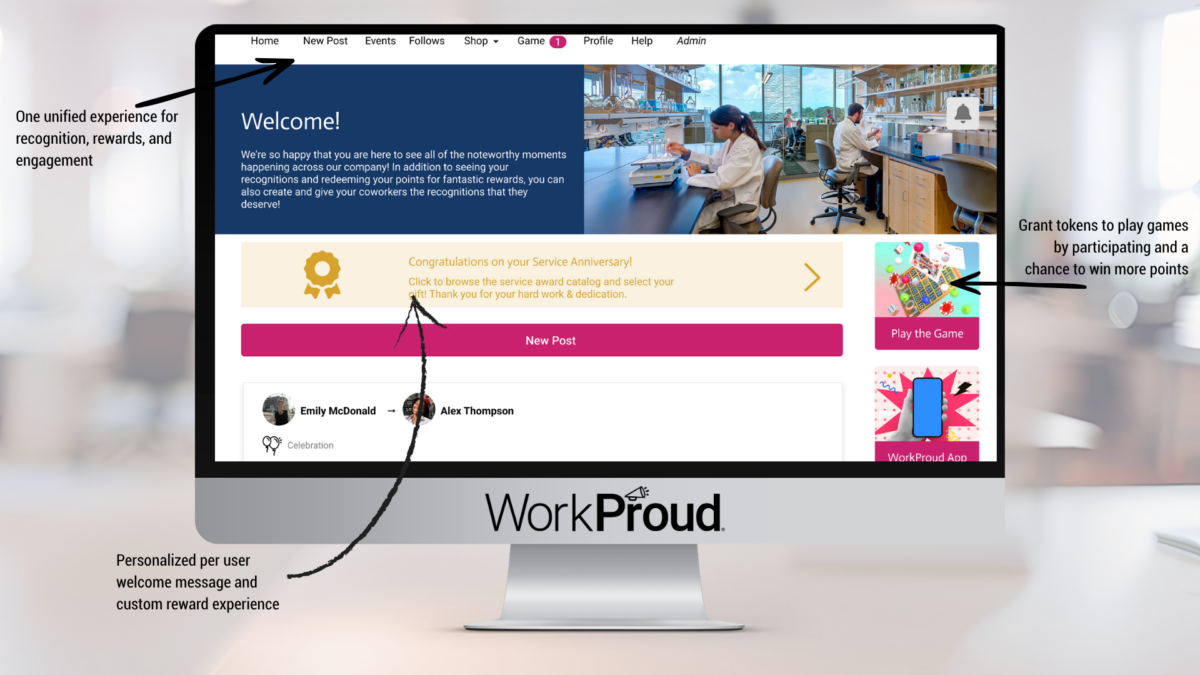
The social feed in action , peer recognition visible across the entire organization, with real,time comments and engagement.
This is what one client described as “the democratization of rewards” , a shift from recognition as something HR administers to recognition as something employees own. “It puts not just the recognition, but the reward in the hands of the employees.”
The operational proof: One global tech company went from 140 recognition moments per year under a manager-initiated model to over 11,000 after switching to peer-to-peer infrastructure. Participation reached 87% across the organization.
If your recognition platform requires a desktop login, your frontline and deskless employees aren’t participating. Not because they don’t want to, but because they can’t.
Recognition infrastructure built for distributed teams starts with mobile. Full feature parity on a native app, not a stripped-down mobile view, but the full recognition, reward redemption, and social feed experience accessible on a phone. The highest-rated mobile app in the recognition category carries a 4.9 rating across both app stores.
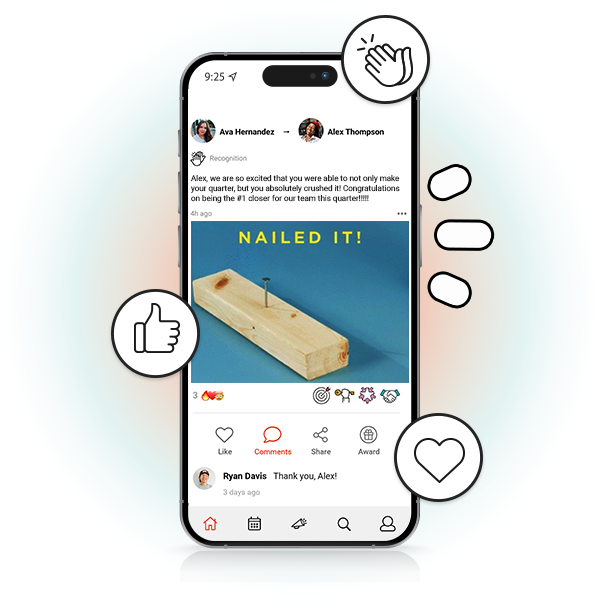
The “gift of choice” , employees redeem points toward what they actually want, from experiences to electronics to gift cards.
What this means operationally: a frontline worker on break opens the app, sees they were recognized by a colleague across the country, redeems their points toward something they actually want, the “gift of choice,” not a sweatshirt someone else picked, and is now visible in the culture data that leadership uses to track engagement. The employees your team calls “hidden warriors”, the ones who “feel separate from the rest of the organization”, become part of the recognition fabric for the first time.
One example: a global company’s Tokyo team, initially hesitant due to language barriers, became one of the platform’s highest user groups once recognition was accessible on their phone and auto-translated across languages. “We’re really good at throwing parties, we’re really good at office events, but those are per office. This really opens it up. Remote folks, global folks.”
Every approach discussed above shares one gap: none of them generate the recognition data a CPO needs to connect culture investment to retention outcomes.
Slack gives you channel messages. Manager programs give you nomination counts. HRIS modules give you milestone completions. None of them answers the question your board is asking: is our recognition investment actually reducing attrition?
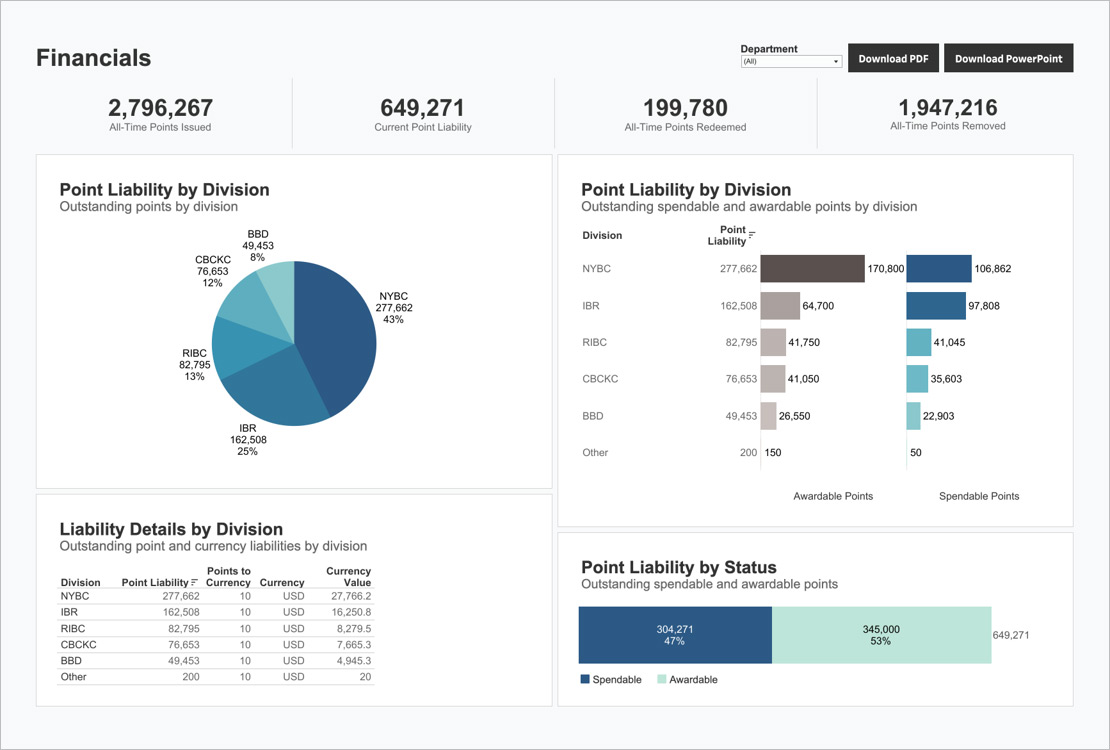
Cross, department visibility, distributed teams connected across locations, roles, and time zones in a single platform.
Recognition infrastructure closes that gap. An analytics dashboard filtered by department, location, or manager reveals which distributed teams have low recognition activity, and cross-references that against engagement and attrition trends. You move from “vibes and email sends” to identifying “culture builders versus culture distractors” from actual data.
One client’s results across four years: engagement scores increased 130%, and the recognition budget declined year over year. The data story wasn’t “we spent more and got more.” It was “we spent less and got more, because the infrastructure compounds.”
As that client’s people leader put it: “Before WorkProud, I couldn’t prove it. I had no data. I just had vibes and email sends and things. That’s not helpful.” After four years on the platform: “How do you truly understand who your culture builders are versus your culture stabilizers versus your culture distractors? It’s really clear when you’re in a system like WorkProud.”
The final ceiling that infrastructure clears is the one most organizations don’t realize they’ve hit: the gap between aspirational values and lived values.
When every recognition moment is tagged to a company value, you’re no longer guessing which values your distributed workforce is living. You’re measuring it. A company tracks five core values, sees that “Innovation” recognition is flat across remote teams, launches a targeted campaign, and next quarter, the score spikes. That’s not a culture initiative. That’s a culture operating system.
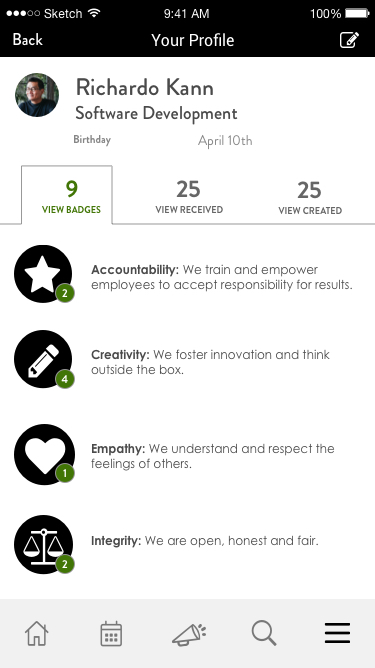
Badges and ECards tied to company values, every recognition moment tagged, tracked, and visible across the organization.
One client saw their “Work as One” value score increase from 43 to 87, a 102% increase, after connecting values to daily recognition behavior.
“If Zoom is the meeting room you pop into, what is the virtual break room where you kind of say, ‘Hey, how’s it going?’ That’s WorkProud.”
Values-based recognition turns distributed culture from something you hope is happening into something you can see, measure, and steer.
What This Means for Your Recognition Strategy
If you’re running recognition through Slack, manager programs, or an HRIS module, nothing in this article says you’re wrong. Those approaches work, within their design limits. The question is whether those limits match the reality of your workforce.
For organizations where 30%, 40%, or 60% of the workforce is remote, hybrid, or frontline, the ceiling isn’t a flaw in the approach. It’s a structural mismatch between the tool and the team. Slack wasn’t designed to generate recognition data. Manager programs weren’t designed to reach invisible populations. HRIS modules weren’t designed to build peer culture across time zones.
WalkMe’s recognition budget declined year over year while its engagement scores rose. Recognition infrastructure pays for itself when it’s tied to retention outcomes.
Evaluating platforms? Look for mobile-first design, peer-to-peer mechanics, values alignment, and analytics that connect recognition activity to retention outcomes.

WorkProud is committed to helping its clients create a unified approach to the employee experience by helping them build cultures of workplace pride. Trusted by millions of users at some of the world’s most recognized employer brands, WorkProud delivers a comprehensive approach to building company cultures that inspire people to be Proud of their Work and Proud of their Company.
An icon of style from Hollywood to hip-hop, the Wayfarer never stands still. Forever embraced by the next generation of culture makers, now its journey continues with AI-enhanced wearable tech. Ray-Ban Meta Wayfarer enables you to live in the moment and share how you see the world. Listen, call, capture and livestream features are seamlessly integrated within the classic frame. Eye size: 50; Frame: Matte Black; Lens: Clear/Graphite Green Transitions; Lens Material: Standard Plastic
Color: Matte Black/Clear-Graphite Green Transitions
A
Afghanistan
Albania
Algeria
Andorra
Angola
Antigua & Deps
Argentina
Armenia
Australia
Austria
Azerbaijan
B
Bahamas
Bahrain
Bangladesh
Barbados
Belarus
Belgium
Belize
Benin
Bhutan
Bolivia
Bosnia Herzegovina
Botswana
Brazil
Brunei
Bulgaria
Burkina
Burundi
C
Cambodia
Cameroon
Canada
Cape Verde
Central African Rep
Chad
Chile
China
Colombia
Comoros
Congo
Congo {Democratic Rep}
Costa Rica
Croatia
Cuba
Cyprus
Czech Republic
Denmark
D
Djibouti
Dominica
Dominican Republic
E
East Timor
Ecuador
Egypt
El Salvador
Equatorial Guinea
Eritrea
Estonia
Ethiopia
F
Fiji
Finland
France
G
Gabon
Gambia
Georgia
Germany
Ghana
Greece
Grenada
Guatemala
Guinea
Guinea-Bissau
Guyana
H
Haiti
Honduras
Hungary
I
Iceland
India
Indonesia
Iran
Iraq
Ireland {Republic}
Israel
Italy
Ivory Coast
J
Jamaica
Japan
Jordan
K
Kazakhstan
Kenya
Kiribati
Korea North
Korea South
Kosovo
Kuwait
Kyrgyzstan
L
Laos
Latvia
Lebanon
Lesotho
Liberia
Libya
Liechtenstein
Lithuania
Luxembourg
M
Macedonia
Madagascar
Malawi
Malaysia
Maldives
Mali
Malta
Marshall Islands
Mauritania
Mauritius
Mexico
Micronesia
Moldova
Monaco
Mongolia
Montenegro
Morocco
Mozambique
Myanmar
M
Namibia
Nauru
Nepal
Netherlands
New Zealand
Nicaragua
Niger
Nigeria
Norway
O
Oman
P
Pakistan
Palau
Panama
Papua New Guinea
Paraguay
Peru
Philippines
Poland
Portugal
Q
Qatar
R
Romania
Russian Federation
Rwanda
S
St Kitts & Nevis
St Lucia
Saint Vincent & the Grenadines
Samoa
San Marino
Sao Tome & Principe
Saudi Arabia
Senegal
Serbia
Seychelles
Sierra Leone
Singapore
Slovakia
Slovenia
Solomon Islands
Somalia
South Africa
South Sudan
Spain
Sri Lanka
Sudan
Suriname
Swaziland
Sweden
Switzerland
Syria
T
Taiwan
Tajikistan
Tanzania
Thailand
Togo
Tonga
Trinidad & Tobago
Tunisia
Turkey
Turkmenistan
Tuvalu
U
Uganda
Ukraine
United Arab Emirates
United Kingdom
Uruguay
Uzbekistan
V
Vanuatu
Vatican City
Venezuela
Vietnam
Y
Yemen
Z
Zambia
Zimbabwe
Here you will find insights curated for leadership seeking in-depth industry knowledge. Explore comprehensive studies, helpful guides, and expert white papers.
*By selecting “VIEW RESOURCES,” you agree to WorkProud’s Privacy Policy. You may unsubscribe from our emails at any time. Please note when unsubscribing: it may take up to 10 business days for your request to take effect.