Click below to learn how WorkProud creates a culture of employee pride and purpose.

Join Jill Christensen, employee engagement expert, best-selling author, and keynote speaker, and Daniel Davis, senior researcher at Hassell and columnist for the Harvard Business Review, as they share valuable lessons and strategies and discuss the disconnect between organizations and their employees when it comes to navigating their remote work policy/flexible work arrangements, and how to build the best work arrangement for your organization.

Senior Researcher, Hassell
Based out of New York, Daniel is a senior researcher at Hassell focusing on the relationship between people and the workplace. Prior to joining Hassell, Daniel was the Director of Research at WeWork, and a research assistant for Antoni Gaudí’s Sagrada Família. He originally studied architecture in New Zealand and later did a PhD at RMIT University in Australia. Daniel is a regular columnist for Architect Magazine and his research has appeared in a variety of publications including Wired, Fast Company, and the Harvard Business Review.
Employee Engagement Expert & Best-Selling Author
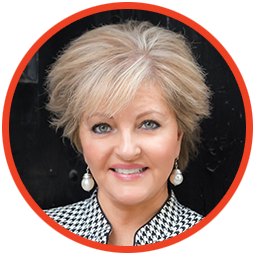
A former Fortune 500 Corporate Communications business executive with a Six Sigma Green Belt, Jill Christensen understands how organizations operate, and what they need to do differently to attract, retain, and engage employees.
 |  |
The most important points regarding creating a remote work strategy that will work both for your organization and employees that were discussed during the meeting (the adapted transcript.)
The main reason why we’re here is that it’s clear that remote work is here to stay. But something else is also clear – we’re learning that there’s a disconnect between leaders and employees in this space.
Recent employee survey data shows us that people think their companies are not keeping their word in regards to changing their remote work policy, their telecommute policy or their flexible work arrangements.
So although we all just aced the greatest social experiment of all time and proved that employees could effectively work remotely and produce as much or more at home than in an office setting, leaders are beginning to change their tune. And this isn’t just HR people saying leaders are changing their tune or supervisors saying that leaders are changing their tune. It’s employees and organizations who feel like the promises leaders made in 2020 about long-term remote work situations are not holding true.
The trend we see across organizations in all industries in all countries around the globe – promises of generous flexible work arrangements and full-time remote work policies are going by the wayside, to the dismay of employees.
This might not be happening in your organization. Still, it is happening in the vast majority of organizations around the globe, and the truth is that this is a travesty because we know that employees want flexibility. To the extent that they get it, they will be inspired, proud, loyal, hardworking, and engaged.
I’m a researcher at Hassel, which is a global architecture and design company. As you might imagine working at an architecture firm right now, a lot of our clients have been coming to us and asking to help them understand what might be happening in the workplace and what the workplace might look like after the pandemic.
When our clients come to us with this question, in part, they’re asking us about the design of their workplace, but implicit within their questions about how they allocate capital, because buildings themselves are expensive to create and maintain; how they manage employees, because where someone works influences how you manage them; and how they structure their business after the pandemic.
18 months ago, this wouldn’t have even been a question! Then, people worked in offices, and unless they were really trying something radical, that was basically the end of the discussion. But today, this isn’t quite as obvious.
I think we’ve all been surprised to see how effectively people can work from home during the pandemic. It left us in a strange place as the pandemic begins to recede because it’s shown that a lot of our conventional wisdom around how the workplace functions may not quite apply as we thought it once did, so I want to focus on this question of the workplace today.
Everyone has an opinion about what the future of work is going to be. I probably receive one email a day about what’s about to happen in the workplace, and I think what’s probably most striking about this is that there’s really no consensus about what’s about to happen.
Some of the experts will argue that our experiment with working from home has been so successful that remote work is here to stay. Others speculate that people are just starving for face-to-face interaction and that central business districts are going to come roaring back.
And splitting the difference, there’s this other group that believes that the future of work won’t be either of these two extremes but some hybrid between the two, where people split their time between a traditional office and a homework environment.
What I think is interesting about a lot of this writing is that there’s this idea that there will be a consensus on this issue. For example, before the pandemic, people worked in offices. Each office might have had slightly different furniture or somewhat different amenities, but for the most part, you could walk into the headquarters of a legal firm, a newspaper, a technology company, basically anywhere in the world, and they’d all look and operate much the same.
We had that kind of same experience of working in a similar manner during the pandemic. So although the pandemic was a really tumultuous time, and it was really difficult for a lot of people to get through, there’s still this kind of commonality in how we worked, which is to say that most people that used to work in an office suddenly found themselves working at home.
We had this common experience of being at home and doing work, but because we’ve always done this thing, I think you’ll also see this sort of assumption in the media that after the pandemic, we’re also going to be always doing the same thing together as well.
So no one’s quite sure what that thing is. Perhaps we’ll be working from home, or maybe we’ll be working from the office, or we’ll be working in a hybrid scenario, but they’re all fairly sure that we’ll be doing the same thing. And our research at Hassel suggests this isn’t the case, and in fact, I think companies are starting to diverge in how they approach the workplace rather than converging on one method.
And if you take anything away from this talk today, I just ask you to challenge this assumption when you hear that everyone will be doing the same thing after their pandemic or that there’s one correct way of doing things after the pandemic.
Thanks to the prudent policy of the Australian Government, the country fared quite well in the first wave of the COVID-19 pandemic and now is one step ahead of other countries in adjusting to the new socio-economic realities.
At the moment, sure, it’s in a bit of a tight spot because the Delta variant emerged and managed to get into Australia through the border, so in the last few weeks, the country’s actually gone back down into lockdowns.
But businesses there at least had this period of say six months where they got to operate without the daily threat of the pandemic. And because they’ve had more time to experience it, the way companies over there adjusted to the post-pandemic workplace and how they’re thinking about it, I think, provides an early indication of what’s likely to happen in other countries.
In Australia, one of the most interesting things that came out of this shift back into the workplace is that you saw the change in focus from basically short-term concerns to this long-term outcome outlook.
By short-term concerns, I mean that initially, as people were returning, many things that people were concerned about were these practicalities of whether elevators will have enough space, how do we get enough physical separation, how do we maintain hygiene in the workspace.
But then, very quickly, that flip to being more about the long-term concerns:
And I think those are far more interesting because they touch on the core of what it is to do work.
To get a better sense of where things were heading in Australia, we ran a series of interviews with Australian business leaders and workplace experts. Then we also ran a survey with 1600 Australian office workers, and we also surveyed 500 office workers in the US. It’s important to note that the people we interviewed were not our clients, friends, family, or anything like that. We had a representative sample of people that work out of offices in Australia, or they would have typically worked out of an office prior to the pandemic.
For me, one of the more fascinating things that we saw from this research was just the variety of workplace models that companies were considering.
There’s a huge range that goes from being completely in person again (going back to the office as it was,) through to a bunch of different hybrid scenarios, such as activity-based working, the Clubhouse, Hub and spoke, or being completely remote as well (no office.)
For me, one of the more fascinating things that we saw from this research was just the variety of workplace models that companies were considering.
There’s a huge range that goes from being completely in person again – going back to the office as it was, through to a bunch of different hybrid scenarios, such as activity-based working, the Clubhouse, Hub and spoke, or being completely remote as well (no office.)
Those five buckets are the five things that firms were looking at, and so I’ll run through each of these models quickly to give you a kind of sense of what the range is there.
Those five buckets are the five things that firms were looking at, and so I’ll run through each of these models quickly to give you a kind of sense of what the range is there.
AS IT WAS
A central office in the city is an easy and proven strategy
The traditional office mode is the one that we’re all familiar with. Essentially it involves employees returning to the office and resuming a regular nine to five. The office may be a little bit more hygienic and flexible, but mostly this is the centralized office as it was prior to the pandemic.
For the organizations that we spoke to that were considering or adopting this model, the main appeal of it is that it’s familiar. These organizations felt like they’d gone through a year of upheaval and change. Many of the employees were going through what they described as change fatigue, and there’s something really comforting about the idea of returning to a place that was already known.
On top of that, it’s a model that is tried and true. Companies have been doing this for decades. They’ve got the real estate ready to go, they know how to operate it, they know that it works in a variety of settings and contexts, and that it’s pretty safe.
But there was also a contingent of companies that I’d say were shying away from this model. Generally, there was a sense for those companies that continuing as it was would be a missed opportunity to do something better than the status quo. Adding on to that was this concern that returning to things as it was may not actually be possible.
In particular, there was this concern that employees may be hesitant to return to the office and that these large offices may feel fairly empty if not everyone’s back in them, which takes away one of the key components of what makes these offices work – the energy that you get from the people around you.
TURBOCHARGED ABW
Activity-based working with a more efficient sharing ratio
We see from many organizations regarding the coming out of the pandemic that they’re considering how to use their office space if employees are spending less time in the office and more time working from home. The problem that they’re essentially facing is that if you have an employee only come into the office three days a week, their desk will sit vacant for two or three or maybe even four days a week.
One common solution here that many companies are looking at is agile workplace models such as activity-based working where employees no longer have an assigned desk. This idea has been around for a few decades now, although it’s not that popular in the US.
What happens is rather than going to an office and sitting at a fixed desk for eight hours a day, you arrive at the office, you’ve got your laptop, and you can choose where you want to work within the office. For example, you might work in a meeting room when you’ve got a meeting, or you might go to a phone booth to make a phone call. It might be a cafe inside your office that you set out to do some of your work, and then you might go into, say, a library-like space to do some heads-down work later in the day.
Activity-based working is fairly common in Australia as it is in some parts of Europe. With activity-based working, organizations are looking to push the sharing ratio of these spaces further as countries start to adapt to new realities.
Before the pandemic, the typical office space sharing ratio in Australia was 0.8, which means that there were 8 workstations for every 10 employees. And remember, those employees are “floating” around the office, so you’re never going to have a situation where you have 10 people trying to sit in eight seats all at once.
Now we see companies looking to push that ratio fairly aggressively to like 0.6 and 0.5, which means there would be 5-6 guests for 10 people. While that sounds super extreme, the idea here is that employees are spending more time working from home, so there will be fewer of them in the office, and it won’t feel overcrowded. This model shrinks a company’s footprint quite dramatically and gives employees some flexibility over where they want to work.
That said, companies adopting this model also face challenges. We know prior to the pandemic that activity-based working was a really challenging model for companies to adopt, mostly because it’s not just a kind of special transformation of what the office looks like but a cultural transformation of how the office operates
CLUBHOUSE
Maximize collaboration, connection, and socialization
Another hybrid model is slightly different from the activity-based model and implies that people are splitting their time based on what they’re doing. The basic idea is that people would come into an office to socialize, interact and collaborate and that they’d work from home when they need to focus more.
A bunch of studies during the pandemic have shown that people find it much easier to focus at home than they did at the office. They are more productive in reading, writing, and other kinds of heads-down focused work. At the same time, it has been difficult for people when they’ve been at home to do collaborative things like brainstorming, ideation, and other kinds of joint activities that rely on other people.
This model combines the strength of these two workplaces: you do all the focus work at home where you’ve got the space to do it, and you come into the office to collaborate and enjoy being around other people.
I don’t think there are too many examples of this being used prior to the pandemic. Still, like the activity-based working model, it comes with the benefit of really shrinking the floor plan within the office and saving a lot of money that way. For me, one of the lingering questions about this model is whether people’s schedules really fit into these neat moments of collaboration and focus and whether you can physically separate these two activities, so I think that needs to be a bit better developed.
HUB AND SPOKE
Live and work in the same area
The “hub and spoke” model was a big thing back in the 80s and 90s, but it’s coming back. It implies splitting a central office in a single city into several satellite offices closer to places of your employee residence.
The theory or idea behind this model is that you presumably end up in this best of both worlds situation, where employees don’t have to commute into an office every day. Instead, they can work somewhere close to their homes and have the benefits of being around their colleagues in an office.
In reality, we’ve had a lot of clients approach us because they’re in a “hub and spoke” office, and they want to consolidate back into a central office. That’s generally because having “a hub and spoke” office is a lot more expensive than having a centralized office.
NO OFFICE
Ditch expensive leases and embrace life at home
The final example here is just going fully virtual and having no office. While this would have sounded super extreme before the pandemic, many companies have found that they’re actually quite happily doing this, and they’ve done it for over a year now.
There’s obviously a huge benefit in terms of real estate costs if you no longer have to pay for an office. On top of that, companies have found that it’s a good way to attract talent because you’ve got a lot more geographic flexibility in where you’re drawing candidates from.
For me, some of the most interesting companies adopting this model are the ones that started during the pandemic. They’ve never known an office had never been a part of their core culture, and they’re building their companies around this model. However, I think there are some unknowns with this. Particularly, working remotely when everyone else is doing it during a pandemic, and doing it when a lot of your competitors are back in an office, might be two very different things.
THE ULTIMATE DECISION IS A COMPLICATED SET OF TRADE-OFFS
So, those are the five models that represent the range of options that many companies are considering in Australia. None of these models are necessarily new, but this scope and breadth that people can consider in this next iteration definitely is.
A TAILORED APPROACH
How much space you need is not a question – it is an answer!
I’ve presented these five workplace models almost like a menu that a company could choose from, but I think it might be a kind of an answer to a whole series of questions that come before them:
Without this kind of foundational knowledge of what a company is and where they want to go, picking the right workplace model can be somewhat fraught. I think if there’s one lesson to take from the workplace during the pandemic, perhaps it’s not that working from home was necessarily better or worse than working from the office, but that each of these modes of work had its own merits. There seems to be this growing awareness that these differences are one of the levers that a company could use to tune the workplace to their needs and the needs of their employees.
We might look back on photographs of workplaces prior to the pandemic and think that they looked odd, not because we’d cram people in so closely without face masks, but because offices before the pandemic were largely one-size-fits-all kind of affairs. It was strange that a company that is a legal firm or a newspaper technology company could all work from an office that looks and operates much the same?
As we all know, regardless of what industry you are in, the desired outcome is the same, and that’s really about adding value to the world, delighting your customers, and in all honesty, make a profit doing this.
We know that the easiest path to that outcome is to create an amazing culture for your employees, which meets their needs, so they give you a ton of discretionary effort every day.
It’s really important to remember that currently, the workforce around the globe is made up 50% of Millennials and Gen Z’s. By the end of 2025, which is only four years off, 75% of the workforce will be Millennials and Gen Z’s. These generations of workers tell us that flexible work arrangement, giving people a runway by having flexible remote work policies, is a key.
Need they also tell us that open and honest communication and recognition are also critical ways that they can be motivated and inspired? So the crux of all of this is that the key is for all organizations to create a unified employee experience that instills pride in every worker every single day, which is my personal goal and the goal of the WorkProud organization.
Because what is the result, the desired outcome of that? It’s increased engagement, and loyalty, and a culture that outperforms your competitors. That enables you to differentiate yourself from the competition, which will enable you to attract and potentially even cherry-pick the best and brightest talent in the world.
Click below to learn how WorkProud creates a culture of employee pride and purpose.
WorkProud is committed to helping its clients create a unified approach to the employee experience by helping them build cultures of workplace pride. Trusted by millions of users at some of the world’s most recognized employer brands, WorkProud delivers a comprehensive approach to building company cultures that inspire people to be Proud of their Work and Proud of their Company.
An icon of style from Hollywood to hip-hop, the Wayfarer never stands still. Forever embraced by the next generation of culture makers, now its journey continues with AI-enhanced wearable tech. Ray-Ban Meta Wayfarer enables you to live in the moment and share how you see the world. Listen, call, capture and livestream features are seamlessly integrated within the classic frame. Eye size: 50; Frame: Matte Black; Lens: Clear/Graphite Green Transitions; Lens Material: Standard Plastic
Color: Matte Black/Clear-Graphite Green Transitions
A
Afghanistan
Albania
Algeria
Andorra
Angola
Antigua & Deps
Argentina
Armenia
Australia
Austria
Azerbaijan
B
Bahamas
Bahrain
Bangladesh
Barbados
Belarus
Belgium
Belize
Benin
Bhutan
Bolivia
Bosnia Herzegovina
Botswana
Brazil
Brunei
Bulgaria
Burkina
Burundi
C
Cambodia
Cameroon
Canada
Cape Verde
Central African Rep
Chad
Chile
China
Colombia
Comoros
Congo
Congo {Democratic Rep}
Costa Rica
Croatia
Cuba
Cyprus
Czech Republic
Denmark
D
Djibouti
Dominica
Dominican Republic
E
East Timor
Ecuador
Egypt
El Salvador
Equatorial Guinea
Eritrea
Estonia
Ethiopia
F
Fiji
Finland
France
G
Gabon
Gambia
Georgia
Germany
Ghana
Greece
Grenada
Guatemala
Guinea
Guinea-Bissau
Guyana
H
Haiti
Honduras
Hungary
I
Iceland
India
Indonesia
Iran
Iraq
Ireland {Republic}
Israel
Italy
Ivory Coast
J
Jamaica
Japan
Jordan
K
Kazakhstan
Kenya
Kiribati
Korea North
Korea South
Kosovo
Kuwait
Kyrgyzstan
L
Laos
Latvia
Lebanon
Lesotho
Liberia
Libya
Liechtenstein
Lithuania
Luxembourg
M
Macedonia
Madagascar
Malawi
Malaysia
Maldives
Mali
Malta
Marshall Islands
Mauritania
Mauritius
Mexico
Micronesia
Moldova
Monaco
Mongolia
Montenegro
Morocco
Mozambique
Myanmar
M
Namibia
Nauru
Nepal
Netherlands
New Zealand
Nicaragua
Niger
Nigeria
Norway
O
Oman
P
Pakistan
Palau
Panama
Papua New Guinea
Paraguay
Peru
Philippines
Poland
Portugal
Q
Qatar
R
Romania
Russian Federation
Rwanda
S
St Kitts & Nevis
St Lucia
Saint Vincent & the Grenadines
Samoa
San Marino
Sao Tome & Principe
Saudi Arabia
Senegal
Serbia
Seychelles
Sierra Leone
Singapore
Slovakia
Slovenia
Solomon Islands
Somalia
South Africa
South Sudan
Spain
Sri Lanka
Sudan
Suriname
Swaziland
Sweden
Switzerland
Syria
T
Taiwan
Tajikistan
Tanzania
Thailand
Togo
Tonga
Trinidad & Tobago
Tunisia
Turkey
Turkmenistan
Tuvalu
U
Uganda
Ukraine
United Arab Emirates
United Kingdom
Uruguay
Uzbekistan
V
Vanuatu
Vatican City
Venezuela
Vietnam
Y
Yemen
Z
Zambia
Zimbabwe
Here you will find insights curated for leadership seeking in-depth industry knowledge. Explore comprehensive studies, helpful guides, and expert white papers.
*By selecting “VIEW RESOURCES,” you agree to WorkProud’s Privacy Policy. You may unsubscribe from our emails at any time. Please note when unsubscribing: it may take up to 10 business days for your request to take effect.