
A remote company can run every play in the culture handbook and still hear the same comment from new hires after 90 days: they do not feel like part of the team yet. The virtual events happen and the Slack channels stay busy, and the culture still feels thin.
In an office, culture is ambient. People pick it up from the hallway, the lunch table, and the way a manager reacts when someone ships good work. Take the shared room away and none of that carries over on its own. A people leader at WalkMe, a WorkProud client, put it in plain terms: her company was good at parties and office events, but those reached one location at a time, and remote and global teams sat outside of them.
For a VP of HR, the useful question is how to make culture something every employee can see and feel in the normal flow of work, wherever they log in from. Adding one more event to the calendar will not answer it.
Most remote culture efforts fall into three buckets. Each one helps, and each one hits a ceiling that shows up faster on a distributed team.
Virtual happy hours and team game sessions give people a reason to show up as humans instead of task-completers. For a small team, that connection is worth real money. The limit is that events are episodic and opt-in. They build warmth for an afternoon, and they do nothing to reinforce the behaviors a company actually values. A leader also cannot read culture health off a calendar invite.
Public thanks in Slack or Teams is fast and happens right where the work does. It also disappears. A kind message scrolls out of view by the next morning, and anyone outside that channel never sees it. Appreciation with no record leaves HR with what one WorkProud client called “vibes and email sends,” which is to say no data a leader can act on.
Formal programs built on nominations and quarterly awards give appreciation structure and weight. They also keep it top-down and infrequent. The quiet contributor two time zones away, the person who rarely crosses the executive team’s line of sight, stays invisible. Culture stays something handed to employees on a schedule instead of something they build with each other every week.
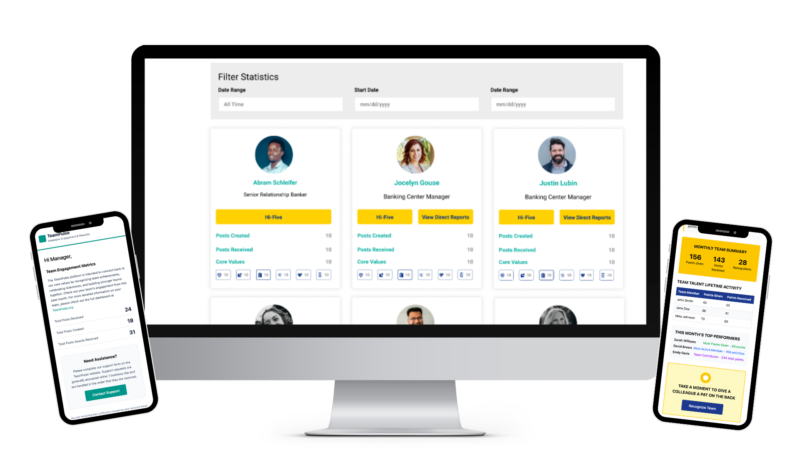
Culture is the set of behaviors a company repeats and rewards. On a distributed team, those behaviors are invisible unless the company gives them a place to show up. That place is peer recognition tied to a specific company value, posted where the whole company can see it.
An employee in one time zone notices a coworker in another do something that matches a value the company cares about, for example Collaboration. They recognize that coworker in WorkProud, attach the value, and add points the coworker can redeem. The recognition lands on a shared feed the whole company reads, and coworkers across regions react to it. A moment that would have stayed inside one channel, or never surfaced at all, becomes part of a record everyone shares.
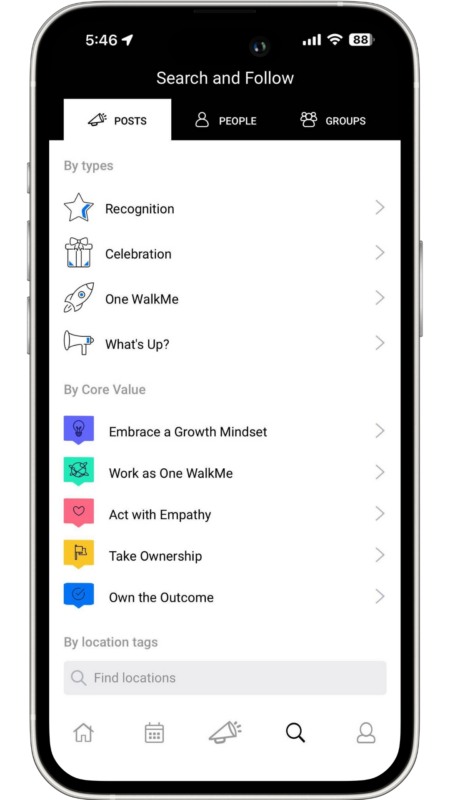
That shared feed does the job the office hallway used to do. It is the virtual break room where distributed coworkers watch each other get valued, in public, against the values leadership says matter.
A recognition tied to a value and visible to the whole company, not buried in one channel.
The reason for putting recognition on a shared feed is reach. A program only changes culture if the people hardest to see can take part: the frontline employee on a phone between shifts, and the new hire in a region headquarters rarely visits.
WorkProud runs on native iOS and Android apps with the same features as the desktop version, so an employee who never sits at a desk can give and receive recognition from a phone. Milestone moments, work anniversaries and role changes, fire automatically, so a five-year anniversary in a remote office does not pass unmarked because a manager was busy. When someone earns points, the rewards catalog gives them something real to redeem, which keeps the recognition from feeling like a digital sticker.
For a global team, the same flow handles multiple languages and currencies, so recognition feels fair whether an employee works in Toronto or Tokyo. One WalkMe team in Tokyo started out hesitant about the platform because of language, and became one of its heaviest user groups.