A senior analyst hits her ten-year anniversary on a Tuesday. She gets an auto-generated email with the company logo, a line about her “dedication,” and a note that 500 points have landed in her account. By Thursday she’s on a recruiter call. Nobody at the company connects those two things, but they’re connected.
Most milestone programs fail in exactly this way. The moment that’s supposed to make someone feel valued for a decade of work lands as a form letter, and the people it lands worst on are the ones you can least afford to lose: your most tenured, most expensive-to-replace employees. For a program owner, milestone recognition is a retention lever, and most companies pull it backwards.
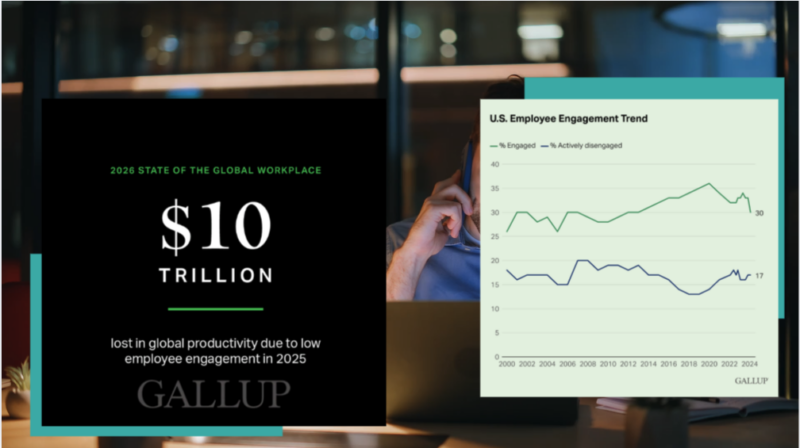
The numbers make the stakes plain. In May 2024, Gallup found 51% of U.S. employees were watching for or actively seeking a new job, and Gallup estimates 42% of that turnover is preventable and routinely ignored. Recognition is one of the most direct ways to prevent it: in a longitudinal study tracking nearly 3,500 employees, Gallup found that well-recognized employees were 45% less likely to have turned over two years later.
And the cost of getting it wrong compounds with tenure. Gallup pegs the cost of replacing an employee at roughly 40% of salary for a frontline role and up to 200% for a leader.
The person hitting a ten- or fifteen-year milestone is usually deep in that expensive end, the one carrying institutional knowledge no onboarding can rebuild. A milestone is the exact moment they pause and ask whether the next five years belong here. What you do in that moment is a retention decision, whether you treat it like one or not.
Having a program is not the fix on its own. Gallup found that even among employees who have a recognition program, only about one in four strongly agree they get the right amount of recognition. Not all programs are equal, and the milestone piece is where the gap shows most.
Three things go wrong, and they tend to go wrong together:
The award is generic. A templated message and a blanket gift tell a ten-year employee the company clocked their tenure and little else. Generic reads as worse than nothing here, because it proves no one was paying attention.
It’s automated in the hollow sense. Plenty of programs automate the email but not the meaning. The system fires a notification; no human moment happens around it.
It measures the wrong thing. The message marks the number of years on the calendar and says nothing about the work those years held. People don’t build careers to be congratulated for not quitting.
Culture-Builder Jordan knows this pattern cold: the 10/15/20-year anniversaries that get a low-meaning gift and a form email, and the tenured employees who quietly resent it. It’s the pain that makes a strong milestone program worth building right.
If you strip it down, a milestone that affects retention does four things a form letter can’t:
It’s specific. It names the actual work, the project someone rescued, the team they built, the thing that wouldn’t exist without them. Specific recognition proves someone was watching.
It’s social. The most powerful milestone moments pull in peers, cross-functional partners, and former teammates, the people who can tell the story of what someone’s work has meant. That turns a private transaction into a shared culture moment.
It centers on impact. The question shifts from “how long have you been here?” to “what did you make possible?” That reframe is what makes an employee picture the next chapter here instead of somewhere else.
It never gets missed. A milestone that arrives three weeks late, or not at all, does more damage than a small one on time. Consistency is the floor.
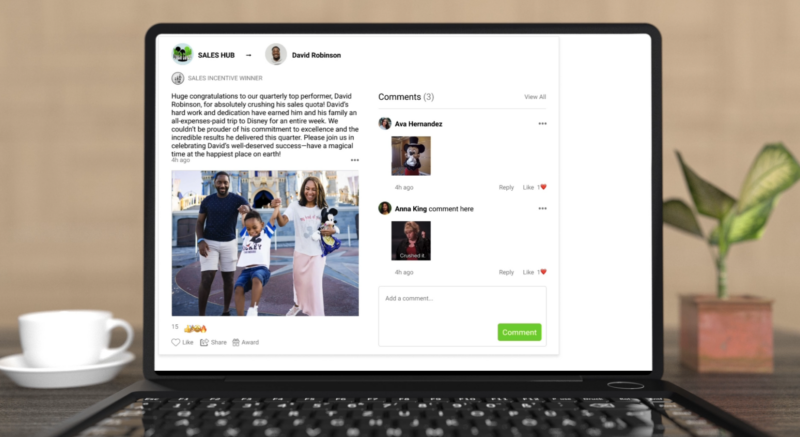
The reason most programs pick one or the other, automated or meaningful, is that doing both by hand doesn’t scale. A program owner running milestones off a spreadsheet either misses dates or sends generic blasts to hit them. WorkProud is built to close that gap.
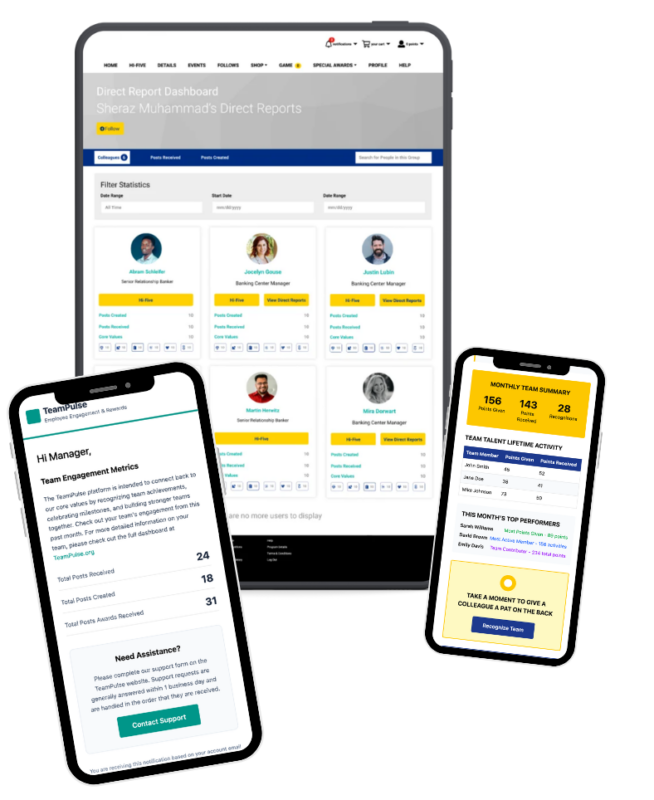
Milestone automation, tied to your HRIS. Anniversaries and role changes fire automatically off your HRIS data, so no one’s ten years slips through because a manager was busy. The system handles the trigger. What happens next is designed to be human.
Values-based, peer-driven recognition. Because recognition runs on a shared social feed and every post can be tied to a company value, a milestone becomes an invitation for the people who worked alongside someone to add the specifics, the stories, the impact. That’s the social and specific part a system alone can’t fake, made easy to happen.
A branded reward catalog tied to milestone tiers. The reward at five years shouldn’t feel like the reward at one. A tiered, branded catalog lets the employee choose something that feels earned rather than issued, which is the difference between a gift that gets used and one that gets forgotten.
The proof that this changes retention outcomes is in the programs that run it. At WalkMe, milestone and anniversary celebrations run automatically across a workforce in 12 countries, and engagement and eNPS climbed 130% between 2022 and 2025. Gables Residential went from 140 recognitions a year to more than 11,000, with 95% of associates taking part and a 35:1 return on the program, the kind of participation that turns a milestone from a formality into a habit people actually feel.
One scenario comes up almost word for word: “Our engagement surveys show satisfaction with recognition drops after the five-year mark. Our milestone awards are auto-generated emails with points, and they feel generic. How do we make milestone celebrations meaningful enough to actually move retention?”
The short answer: build the milestone into a story worth telling. Keep the automation for the trigger so nothing is missed, and redesign the moment to be specific, social, and centered on impact. Practically, that means three moves: automate the milestone off HRIS data so every one lands on time; open each milestone to peer recognition tied to a value, so the celebration is built from the actual work and the people who saw it; and give a tiered reward the employee chooses. The drop after year five comes down to one thing: the recognition people get stops being personal. Fix the personal, and the drop flattens.
The last piece is proof. Because milestone recognition runs through one system tagged to teams and values, you can see participation by group and tenure, and spot where recognition has gone quiet before that silence turns into a resignation. That gives a program owner the report a VP of HR can take to the board: recognition behavior, connected to engagement and retention, in numbers a CFO accepts.
You don’t need to overhaul everything to start. Pull the list of employees hitting a five, ten, or fifteen-year anniversary in the next quarter, the ones a form email would otherwise reach. Those are the moments worth getting right first, because they’re the ones most likely to decide whether your most experienced people stay.
WorkProud can automate those milestones off your HRIS, make each one social and specific, and show you the retention story underneath. If you want to see what that looks like for your own tenure data, take a look at how it works.