
Every HR leader has watched this happen. A reorg gets announced, or a merger closes, or a quarter arrives where the targets move twice. Some teams absorb the hit and keep going. Others quietly come apart the strongest people start taking recruiter calls, the energy leaks out of meetings, and work that used to feel shared starts to feel lonely.
We tend to call the difference between those two teams “resilience,” and we tend to treat it like a personality trait, something you screen for in interviews. It isn’t. Resilience is built into a team, or worn out of it, by hundreds of small signals about whether the work people do is seen and whether it counts. Most of those signals are recognition, or the lack of it.
That’s the piece leaders underrate. You can’t hire your way to a resilient culture. You build it in the ordinary weeks so it holds up in the hard ones.
Resilience rarely breaks from one dramatic event. It erodes from the steady experience of doing real work that nobody notices. The frontline employee who keeps the operation running and never hears a word about it. The analyst two time zones from headquarters whose late nights show up in someone else’s deck. WorkProud clients have a name for these people: the “hidden warriors.” They carry a lot, and they carry it unseen.
When recognition is rare, late, or reserved for the same few names every quarter, people absorb a quiet lesson: effort here is invisible. That lesson is corrosive on a good day. During a stressful stretch, it is the thing that tips someone from tired to done.
The evidence here is blunt. Gallup and Workhuman studied more than 12,000 employees across 12 countries and found that people who receive the right recognition are up to 90% less likely to report being burned out “always” or “very often.” In their workplace-culture research, employees who strongly agree that recognition is part of how their company operates are about half as likely to experience frequent burnout, and 3.7 times as likely to be engaged.
One finding matters more than the rest for resilience: fairness is the hinge. When employees believe recognition is given out equitably, Gallup and Workhuman found they are measurably more resilient and far less likely to burn out. When they believe it is unfair, they are up to 2.5 times as likely to say they are burned out always or very often. So the goal is not just more recognition. It is recognition that reaches everyone, not only the usual names.
You cannot fake this with an annual survey or a single appreciation week. Resilience comes from recognition that happens often, reaches everyone, and stays where people can see it and that is what WorkProud is built to run. See how peer recognition works on the platform.
Resilience compounds the same way trust does, in small and frequent deposits. That is exactly what peer recognition is built to do.
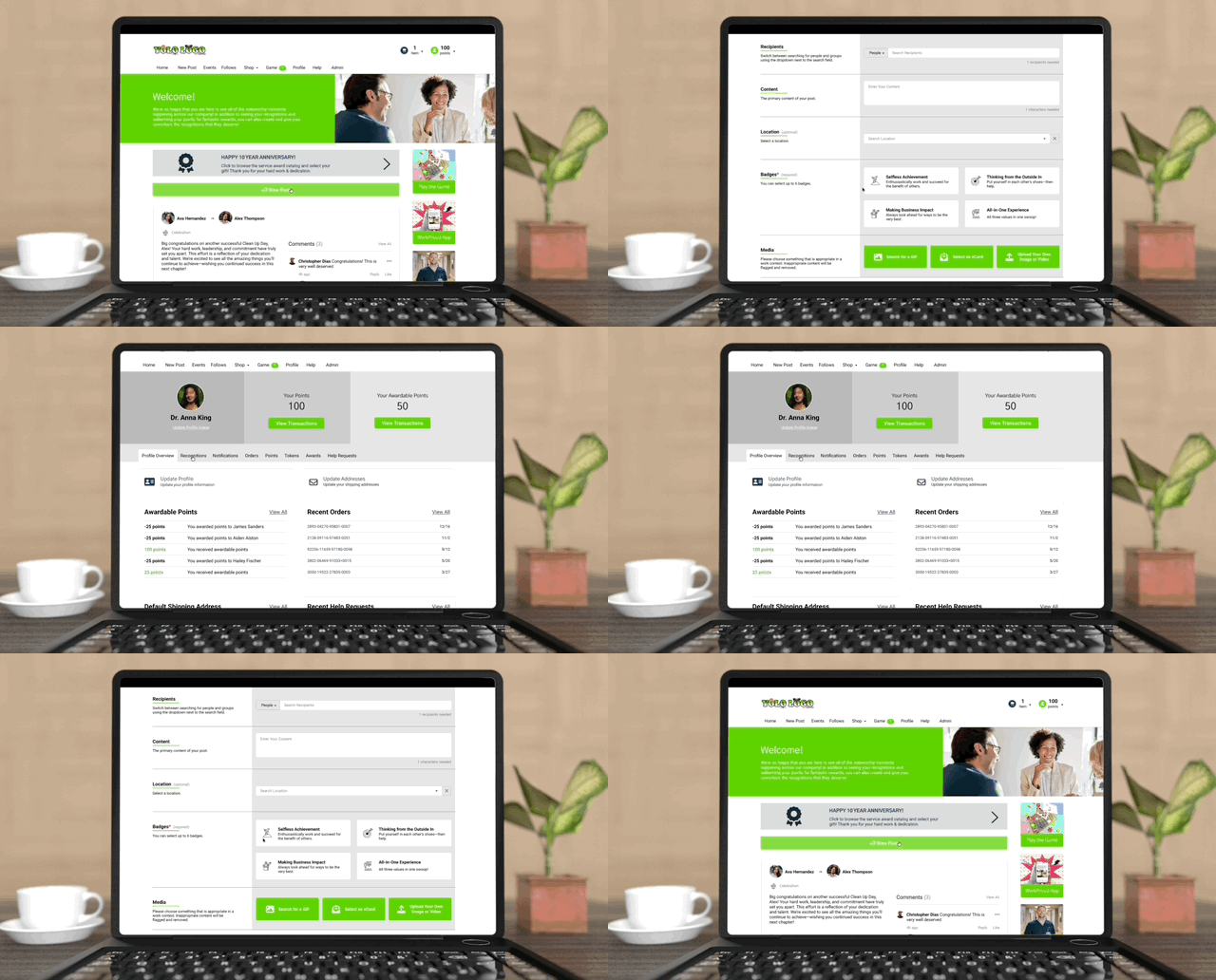
On WorkProud, anyone can recognize anyone, tie the recognition to a company value, and post it to a feed the whole organization sees. A teammate notices someone cover a hard shift, or steady a panicked customer, or quietly mentor a new hire, and says so in a way that lasts and that everyone can see. The hidden warriors stop being hidden. Over a quarter, those moments add up to a team that knows its effort registers, which is the raw material of resilience.
The feed matters as much as the act. It is the connective tissue a distributed or stressed team loses first. When recognition is public and frequent, people see their colleagues being valued even on the weeks they feel stretched thin themselves, and that shared visibility is what keeps a team feeling like a team.
Here is the cruel irony of recognition. The moment a team needs it most is the moment most programs fall silent. During a merger or a restructure, leadership goes heads-down, managers get overloaded, and the appreciation that holds people together dries up right when the stress peaks. ROI-Focused Rachel knows this pattern well: recognition programs tend to collapse during the exact events that put culture at risk.
A program built into the daily flow of work behaves differently. At Webster Bank, recognition became part of how the company absorbed acquisitions. As newly acquired employees came on board, a shared recognition feed replaced the inconsistent, manual processes they would otherwise have faced, and people who could have felt like outsiders during a disruptive transition instead felt welcomed and part of the culture from day one. WorkProud’s own description of the outcome is plain: what could have felt like a disruption became a smooth and motivating transition.
WalkMe saw a version of the same thing. Across a stretch of real change, the company sustained recognition rather than pausing it, and engagement and eNPS climbed 130% between 2022 and 2025. Resilience was not a slogan on a values poster. It was a habit the platform kept alive when the calendar got hard.
A VP of HR does not get budget for a feeling. The advantage of running recognition through one system is that resilience stops being invisible and starts being measurable.
Because every recognition is tagged to a value and a team, the analytics show where appreciation is flowing and, more usefully, where it has gone quiet. A team whose recognition activity drops off is often a team heading toward disengagement, and you can see it weeks before it shows up in a resignation. That early signal is the difference between a conversation and an exit interview. It also gives Rachel the board-ready story she needs: recognition behavior, engagement, and retention, connected, in numbers a CFO will accept.
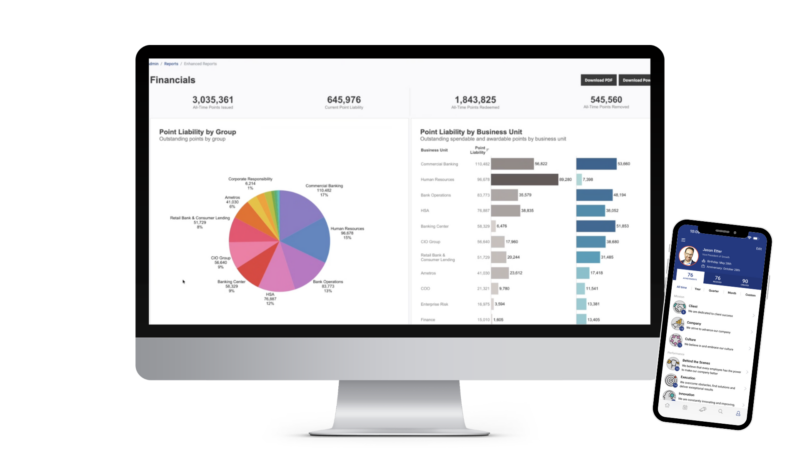
A team that goes quiet on the feed is often a team heading toward burnout. You can see it early.
Resilience is not a wellness webinar or a meditation-app subscription bolted onto a hard year. It is the steady, visible, fair recognition of real work, kept alive especially when work gets hard. WorkProud makes that recognition frequent, peer-driven, and measurable, for the people at headquarters and the ones who never set foot in it. See how it works across your teams.
Resilience is a reserve. It gets drawn down in the hard quarters and topped back up in the ordinary ones, through small and regular signals that people’s work is seen and counts. A company that waits for a crisis to start recognizing people is trying to fill the tank with the engine already redlining. The teams that hold together are the ones that built the habit early, before anything forced them to.
You do not have to take this on faith. Fair, frequent recognition is what helped Webster Bank hold its culture through acquisitions, and what helped WalkMe lift engagement through years of change. See the results other teams have gotten, then bring us your own numbers when you are ready.
Building community at work? It’s lonely. Especially when you’re the only one in your organization who gets it.
That’s why we’re building TEECH! This is a community for HR leaders, Total Rewards professionals, and People ops folks who are tired of theory and want real execution.
You’ll find:
We’re opening the waitlist now. Join here and be part of something built for people like you.Bu