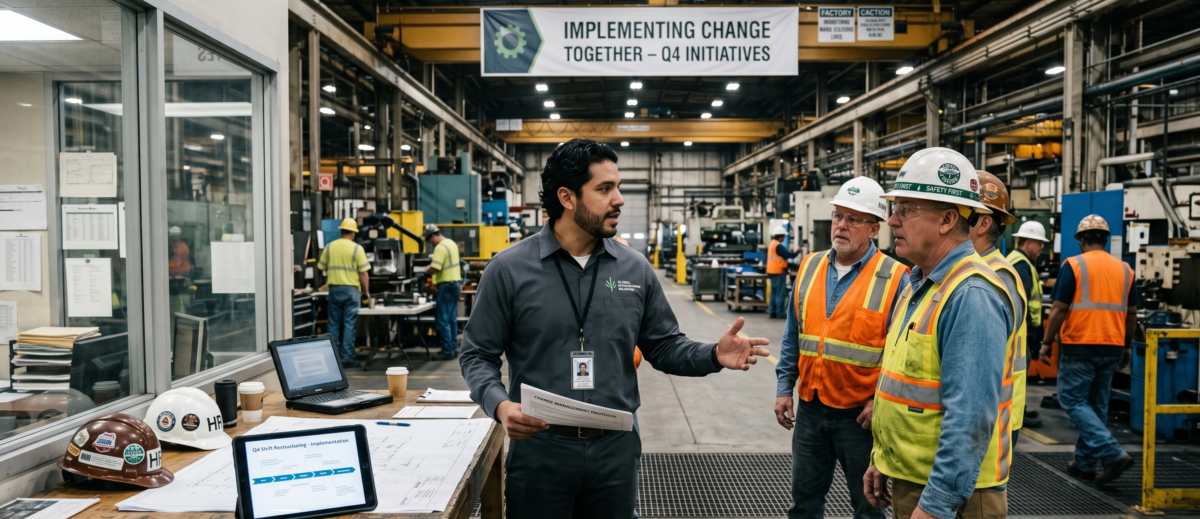
The average employee lived through ten planned company changes in 2022. In 2016, that number was two. The figure comes from Gartner, and it names something every HR leader already feels in their bones: change is no longer an event you manage and recover from. It is the permanent weather.
Here is the harder number. When Gartner asked business leaders whether their last change effort actually landed with employees in a healthy way, only 32% said yes (link). Nearly four in five employees report low trust in organizational change. So most change programs are not failing because the plan was wrong. They are failing because the people the change depends on quietly check out somewhere between the kickoff town hall and the third reorg of the year.
That is an engagement problem wearing a change-management costume and most change-management playbooks are not built to solve it.
If your company has run a real change effort, you know the standard playbook. A communication plan with a steady cadence of updates. Town halls and FAQs. Training on the new system or the new structure. Change champions recruited from each team. A pulse survey to check the temperature every few weeks.
None of that is wrong. It exists because the alternative, springing change on people with no warning or explanation, is worse. A clear comms plan and honest training are the floor, and every company going through a merger, a restructure, or a return-to-office shift should have them.
The trouble is that the floor is where most companies stop.
The standard playbook has a ceiling, and Gartner’s research points straight at it. Three cracks show up almost every time.
It is a broadcast, not a conversation. Communication plans push information down. They tell people what is changing and what to do about it. Gartner found that leaning mainly on top-down change management is one of the largest drivers of change fatigue, because it sidelines the people being asked to change. Being informed is not the same as being engaged, and employees feel the difference immediately.
It measures too late. A pulse survey every few weeks tells you engagement dropped after it already dropped. By the time the dip surfaces in a dashboard, the disengaged employee has had three weeks to update a resume.
And it sells the destination while ignoring the journey. Most change communication points at the far horizon, what the company will look like once the transformation is finished. Gartner’s recent guidance turns that around: leaders who acknowledge steady progress along the way get markedly healthier adoption than leaders who keep gesturing at the vision. People need to feel that their effort in the messy middle counts for something. The standard playbook almost never gives them that.
Here is the upgrade, and it does not replace the comms plan or the training. It sits on top of them. The companies that hold engagement steady through change treat recognition as part of the change effort itself, not as a nicety for calmer times.
It works because recognition does the three things the standard playbook cannot.
It makes change a two-way exchange. When anyone can recognize a colleague for taking on the new way of working, and tie that recognition to the value the change is meant to build, change stops being something done to people and becomes something they do for each other.
It acknowledges progress in real time. This is the exact move Gartner says leaders should make more often, and recognition is structured acknowledgment of progress. A post that says “you steadied the team through that migration” is a small, public marker that the hard part in the middle was seen.
It shows you engagement while it moves. Because recognition runs through one system and is tagged to teams and values, you can watch which groups are leaning into the change and which have gone silent, in real time, while there is still time to act. That is the early signal a quarterly survey will never hand you.
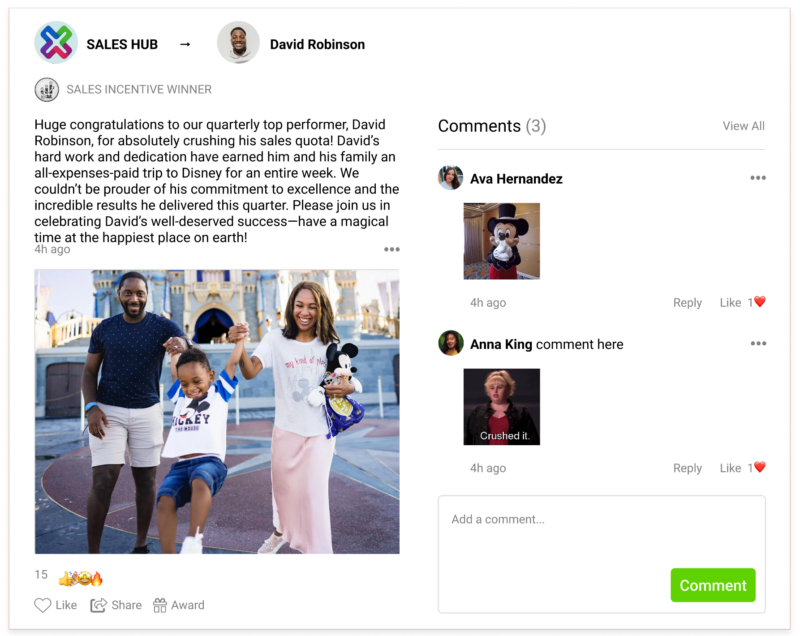
Recognition tied to the behavior the change is meant to build. The acknowledgment Gartner says leaders skip.
Most companies bolt recognition on after a change has already gone sideways. The ones that keep engagement steady build it in before the kickoff, so the acknowledgment is already flowing when the disruption lands. See how that works inside WorkProud.
This is not theory. Webster Bank used recognition to absorb acquisitions, which is about the most disruptive change a company can put its people through. As newly acquired employees came on board, a shared recognition feed replaced the inconsistent, manual welcome they would otherwise have gotten, and people who could have felt like outsiders during the transition instead felt part of the culture from week one. Webster’s own summary of the outcome: what could have felt like a disruption became a smooth and motivating transition.
WalkMe ran a multi-year stretch of change and kept recognition running rather than letting it fall quiet. Engagement and eNPS climbed 130% between 2022 and 2025. People stayed engaged not in spite of the disruption, but because appreciation kept showing up while everything else moved.
Gallup and Workhuman put numbers on the wider pattern. A culture of recognition can preserve a positive employee experience even through disruption, and can save a 10,000-person organization up to $16.1 million a year in turnover costs.
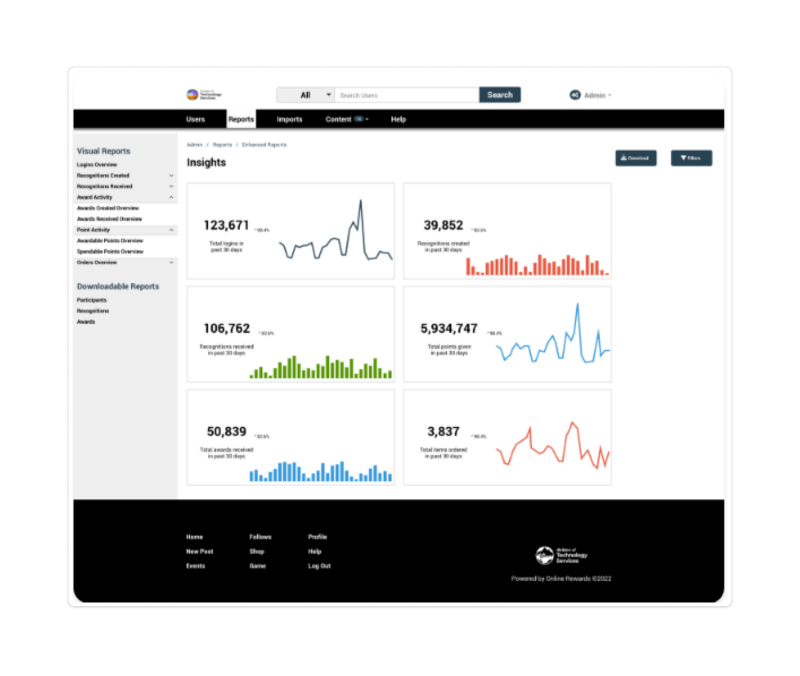
Which teams are leaning into the change, and which have gone quiet, while you can still do something about it.
Change management is only going to get harder, because there is going to be more change. Gartner’s own advice for the next few years is blunt: stop treating change as the occasional project and start treating it as the constant. The companies that manage that well will not be the ones with the slickest comms decks. They will be the ones where employees feel seen while the ground shifts under them.
Recognition is the most direct way to give people that feeling at scale, and it is the piece of the change toolkit most companies still leave on the shelf. Your next reorg, migration, or merger is already on a roadmap somewhere. Before it starts, look at how companies like Webster Bank and WalkMe kept their people engaged through exactly that kind of disruption. Walk through the case studies.