Building Community at Work: The Execution Playbook

office community playbook

Key Takeaways: The Case for Execution

  • Community is a Systematic Process, Not an Accidental Outcome: Real employee belonging is built through systematic execution, not sporadic efforts like confusing a town hall with cultural building.
  • It Drives Business Results, Not Just “Soft HR”: Community building is operational leverage that delivers measurable outcomes, not just “motivational poster results”.
  • Massive Retention Multiplier: Employees who feel high company pride are 21 times more likely to stay long-term.
  • Recruitment Advantage: Proud workers are 36 times more likely to recommend your company to a friend.
  • Significant Financial Impact: Successful execution can yield high ROI (e.g., 35:1) and massive cost avoidance (e.g., $2.1 million in avoided turnover costs).

Introduction: Beyond Buzzwords

“We want to build a community.”

You’ve probably heard this in a strategy meeting. Maybe you’ve said it yourself. Alongside “foster innovation” and “drive engagement.” It all sounds good on a slide deck. Then what actually happens? Not much.

Here’s the thing: building community isn’t complicated. It’s just not accidental.

Most organizations don’t fail at community because they don’t want it. They fail because they treat it like an outcome instead of a process. They confuse a town hall with cultural building. They launch a recognition program and wonder why adoption stalls after three months. They assume that good hiring and flexible schedules automatically create belonging.

It doesn’t work that way.

Real community—the kind where people actually feel connected, proud, and reluctant to leave—requires systematic execution. Not to be a jerk about it, but I’m going to walk you through exactly what that looks like. Because the organizations that get this right see the results immediately: 130% increases in engagement (WalkMe), 35:1 ROI (Gables Residential), 18% turnover reduction despite industry chaos (Jersey City Medical Center).

Not motivational poster results. Business results.

This is the execution guide. Not the theory. Not the PowerPoint. The actual steps to build community that holds together, that scales across locations and shifts, and that keeps people engaged even when circumstances get difficult.

Feeling like you're part of something with community

Why Community Matters: The Numbers Don’t Lie

Look, I’m not here to convince you that community is nice. You already know that. What matters is whether it moves the needle on actual business outcomes.

It does.

The research is simple: employees who genuinely feel part of something—who are proud of their company and connected to its mission—don’t just feel better. They perform better. They stay longer. They recruit for you. They produce.

Here are the numbers that matter to your CFO:

Retention. Employees with high company pride are 21 times more likely to stay long-term. Not 1.5x. 21 times. And if you’re trying to retain younger workers (30 and under)—the ones everyone’s fighting over—that ratio becomes 6 to 1 on long-term commitment, and 8 to 1 on whether they’d stay even if offered significantly more money to leave. (Source: The WorkProud Study)

Recruitment. Workers with high company pride are 36 times more likely to recommend your company to a friend. In a labor market where 70% of hires come from referrals, that’s not a perk. That’s a multiplier.

The Real Impact: Stability During Change. WalkMe went through a major SAP acquisition in 2024. During integration, their voluntary attrition declined by double digits while maintaining engagement scores that most companies only dream about. Why? Because consistent recognition tied to clear values kept people anchored during uncertainty. When everything else is shifting, knowing what your company actually stands for becomes your lifeline.

Jersey City Medical Center had turnover rates 34% above the healthcare industry average. After building a real recognition culture, they cut turnover by 18% in the first year alone. Math it out: on a 2,500-person workforce, that’s 142 fewer people to replace. At 50-200% of annual salary in replacement costs? We’re talking $2.1 million in avoided costs.

Gables Residential, a 1,200-person real estate company, moved from recognizing 14% of employees once a year at a banquet to 11,000 recognitions annually with 95% participation. Result: 35:1 ROI.

This isn’t soft HR. This is operational leverage.

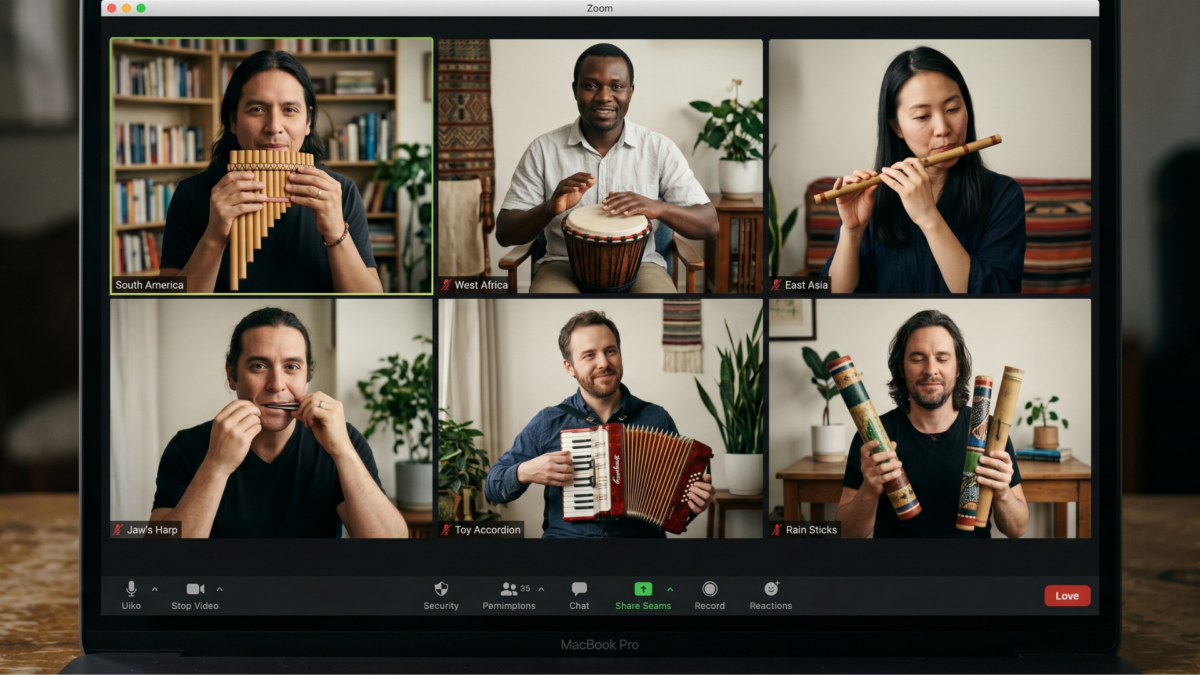
musicians play on video

What Actually Builds Community: 12 Things People Actually Care About

Before you execute, you need to know what you’re building.

We surveyed 1,000 workers and asked a simple question: What would make you proud to work here? The patterns that emerged spell out exactly what community is built on. It’s not one thing. It’s a combination of twelve.

  1. Fair Compensation. People need to know they’re valued financially. Not the highest pay on earth. Fair. Transparent. Tied to contribution.
  2. Community Impact. Does your company make a positive difference in the world? Even locally counts. Employees want to work somewhere that matters.
  3. Recognition for Contributions. This is the big one. When people’s work is seen, appreciated, and celebrated consistently, they feel like they belong. Without it, everything else rings hollow. At WalkMe, they moved from sporadic Slack shoutouts to 12,100 recognition posts in less than two years because the system was built into daily work. Recognition went from something that happened sometimes to something that was part of how we work.
  4. Employee Development. Community members see a future. They need clear paths forward and someone invested in getting them there.
  5. Respect and Concern from Everyone. Not just from your manager. From colleagues. From leadership. From the system. Do people feel genuinely psychologically safe?
  6. Transparent Communication. Community thrives on trust. Trust requires knowing what’s happening, why decisions are made, and how you fit in.
  7. Values and Ethics. People work for companies whose values align with theirs. When leadership decisions reflect stated values, people trust the place. When they don’t, it poisons everything.
  8. Genuine Employee Care. Does the organization actually care about people as humans? During emergencies, during personal crises, during transitions? Or is the relationship purely transactional?
  9. Diversity and Inclusion. Community can’t exist if people feel excluded. This is non-negotiable.
  10. Strong Products and Services. People want to be proud of what they make. When the product is mediocre, no amount of team building compensates for that fundamental issue.
  11. Social Responsibility. Does the company take responsibility for its impact? Not just quarterly. Genuinely.
  12. Ownership and Accountability. Do leaders own their failures? Or do they blame-shift? Communities are built on shared responsibility, not finger-pointing.

These twelve things aren’t separate initiatives. They’re the operating system. And they’re all built through execution.

The Execution Framework: From Aspiration to Actual Results (Five Phases)

This is where most organizations check out. They like the theory. They like the metrics. Then they get to the “how” and it gets fuzzy.

I’m going to make it unfuzzy.

Building community requires a structured approach. Not rigid. Structured. One kills creativity. The other enables it.

The framework has six core phases. I’m going to walk you through each one with specifics.

Phase 1: Define Your North Star (Weeks 1-2)

You can’t hit a target you haven’t identified.

Step 1: Write Your Community Vision

Not your company mission. Your community vision. What does it feel like to work here? What makes someone proud?

This should be written down. Specific to your context. It answers:

  • How do people feel about coming to work here?
  • What would make someone recommend us to a friend?
  • What makes someone want to build their career here?
  • When someone leaves and moves to a competitor, what will they miss?

Madeline Des Jardins at WalkMe got this right. Before she launched anything, she spent weeks listening. Over 20 focus groups. An organizational health survey with 87% participation. Then she built the program around what she actually heard—not what executives assumed people wanted.

Step 2: Set Specific Objectives

What are you actually trying to move?

  • Reduce turnover from X% to Y%
  • Increase referral hire percentage to X%
  • Get 50% of employees feeling “high company pride”
  • Improve eNPS by X points

Make it measurable. Make it tied to business metrics your CFO cares about. Make it achievable in a realistic timeframe (12-18 months, not 90 days).

Step 3: Audit Current State

What’s already happening? What’s working? Where are people already feeling connected?

Talk to people. Don’t assume. You might find that recognition is already happening (scattered across Slack channels), or that your deskless employees have zero visibility into company culture, or that certain departments are thriving while others are silent.

This is the listening phase. Do it properly.

Phase 2: Build the Infrastructure (Weeks 3-6)

You need three things:

Step 4: Get Real Leadership Buy-In

This is non-negotiable. And I mean real buy-in. Not “we support culture.” Actual, measurable commitment.

What does that look like?

  • Leaders publicly recognizing peers (not just direct reports)
  • Development conversations are quarterly, not annual
  • Decisions reflect stated values
  • Leaders are held accountable if participation stalls

Make this explicit. It’s part of their job description. It affects their evaluation.

Step 5: Allocate Actual Resources

Community has a cost. Recognition budgets. Platform fees. Time for someone to manage it. Training. Communications.

Don’t promise community on a shoestring. Get real about what it takes. At WalkMe, every employee gets 10 points per month, managers get 25. That’s not free. But it’s measurable. And it works.

Step 6: Assemble Your Team

You need cross-functional representation:

  • HR (engagement, development)
  • Operations (actually embedding this in daily work)
  • Communications (telling the story)
  • Finance (sustainability, budgets)
  • Department heads (making it real in their areas)

This team meets regularly. Not occasionally. Regularly. Weekly or biweekly depending on phase.

Phase 3: Design the Experience (Weeks 7-10)

Now you’re building what community actually looks like.

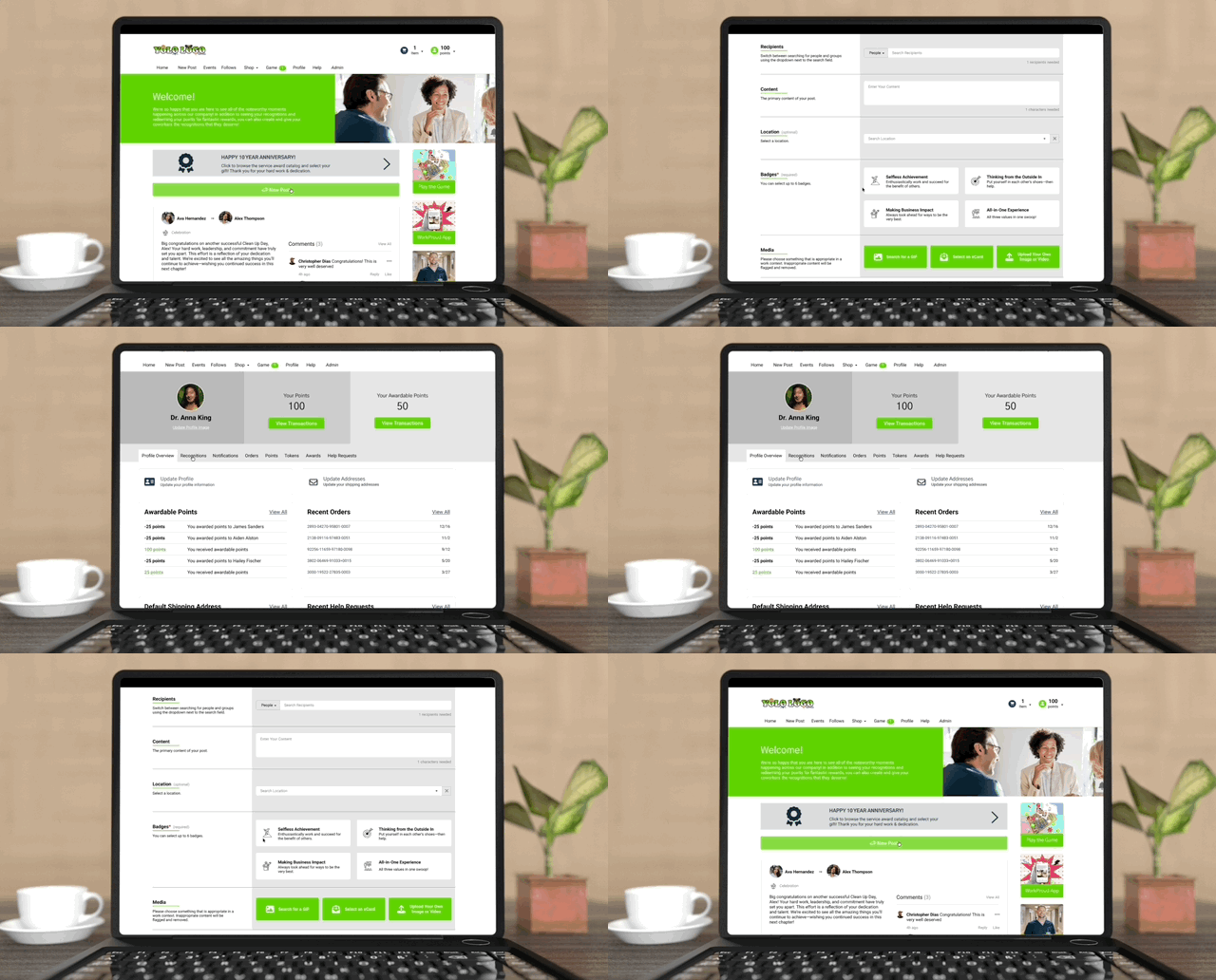
Step 7: Build a Recognition System That Actually Works

Here’s where most organizations screw up: they build a system that’s admin-heavy or complicated or too formal. So nobody uses it.

It needs to be:

  • Fast. A manager should be able to recognize someone in under 60 seconds from a phone
  • Accessible. No corporate email required. Native mobile app. Works offline if you need it to.
  • Tied to values. Every recognition should connect to something that matters (company values, behaviors you want to reinforce)
  • Visible. Public feed so people see what good looks like
    Meaningful. Actual rewards that people want, not participation trophies

At Gables Residential, they moved from recognizing 14% of the workforce once a year to 11,000 recognitions per year with 95% participation. How? They made it easy. They automated distribution. They tied it to values. They made the rewards actually valuable.

Step 8: Create Paths for Development

People need to see a future. This means:

  • Transparent career paths (or at least possibilities)
  • Quarterly development conversations (not annual reviews where nobody remembers anything)
  • Access to training, mentoring, coaching
  • Clear process for advancement

Step 9: Design Your Communication Strategy

How does community happen? How do people hear about it, see it, feel part of it?

This includes:

  • Regular all-hands (but make them two-way, not just broadcast)
  • Team meetings that explicitly include recognition time
  • Digital platforms (internal comms, your intranet, whatever works)
  • Leadership visibility (leaders actively participating, not just watching)
  • Story sharing (celebrating specific people, not just announcements)

The key: every communication should either share information, build connection, or celebrate someone. No pointless emails.

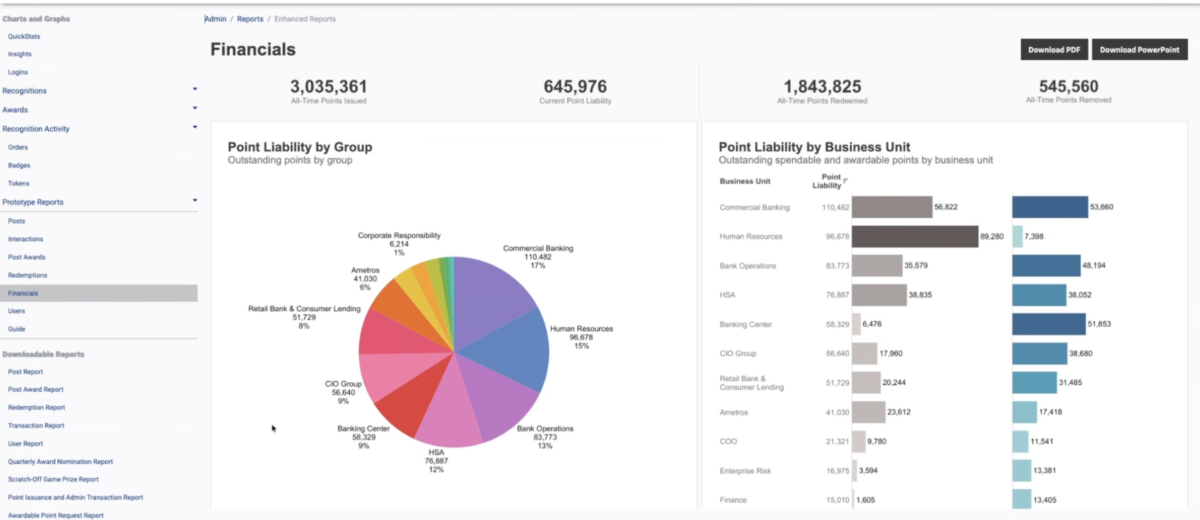
Step 10: Establish How You’ll Measure Progress

If you’re not measuring, you’re guessing.

Monthly/quarterly metrics to watch:

  • Recognition participation rates (% of people giving, % receiving)
  • Pulse survey results on pride and belonging
  • Leadership participation rates
  • Adoption by location/department (are some areas lagging?)

End-of-year metrics:

  • Turnover rate (particularly voluntary)
  • Internal promotion rate
  • Referral hire percentage
  • Engagement scores
  • Employee NPS

Track this. Obsessively. (Like, bad ex… get it?)

You can’t manage what you don’t measure.

Phase 4: Activate and Launch (Weeks 11-14)

You’ve designed it. Now bring it to life without making it weird.

Step 11: Build an Ambassador Network

Don’t rely on HR to drive adoption. Identify natural leaders in each department—people who already drive connection, who are trusted, who are genuinely excited about this.

Give them:

  • Early access (30 days before launch)
  • Clear talking points
  • Permission to evangelize
  • Recognition for helping adoption

They become your visible face of this work. Not HR. Them.

Step 12: Launch with a Campaign

Not a single event. A 4-6 week campaign.

Week 1: Introduce the vision. Why does this matter? How does it connect to company goals?

Week 2: Show how to participate. Make it stupidly easy.

Week 3: Share early wins. Show what good looks like.

Week 4-6: Sustain momentum. Keep celebrating. Keep evangelizing.

Expect slow adoption. People are skeptical of corporate initiatives. You have to prove this isn’t theater.

Phase 5: Sustain and Deepen (Weeks 15+)

The real work starts after launch. This is where most programs die: they launch, get attention for a quarter, then fade.

Step 13: Quarterly Review and Iteration

Every 13 weeks:

  • Review metrics against objectives
  • Get feedback from employees
  • Identify what’s working, what’s not
  • Make adjustments
  • Celebrate progress publicly

This is not a set-it-and-forget-it thing. Community requires constant attention.

Step 14: Integrate Into Daily Work

The more recognition becomes “how we work” rather than “the program,” the better.

This means:

  • Recognition happening in team meetings naturally
  • Development conversations as normal rhythm, not special events
  • Values showing up in hiring and promotion decisions
  • Communication being transparent as default
  • Celebration being routine, not special

Step 15: Tell the Story Constantly

Communities that sustain are ones where the narrative is constantly reinforced.

Share stories of community members. Celebrate milestones. Highlight how values are showing up. Maintain visibility of leadership commitment. Acknowledge challenges honestly.

Madeline at WalkMe saw adoption accelerate because she was relentless about storytelling. She’d post recognition stories, share employee testimonials, celebrate department wins. Not in a corporate way. Authentically.

Real Obstacles and Honest Solutions

Building community at scale is genuinely hard. Here’s what usually gets in the way and what actually fixes it:

Obstacle 1: Leadership Doesn’t Actually Believe In This

This is fatal. You can’t build community from the bottom up if leadership thinks it’s nice-to-have rather than business-critical.

Fix: Start by showing the numbers. Turnover costs. Recruiting costs. Referral rates. Show WalkMe’s 130% eNPS increase. Show Jersey City’s $2.1M in avoided turnover costs. Then make a deal: “Give us 12 months. If the metrics move, this is permanent. If not, we kill it.”

Most of the time the metrics move.

Obstacle 2: Recognition Feels Forced

If your recognition program feels like corporate theater, it kills community faster than having no program. People have bullshit detectors.

Fix: Start organic. Let recognition emerge naturally before you systematize it. Make sure the behaviors you’re recognizing are real. Let peers recognize peers (not just bosses). Test with early adopters. Get feedback. Iterate before you go full-scale.

Obstacle 3: You Launch, Get Excited for a Quarter, Then Nothing Happens

Most programs fail here. The launch is energetic. Three months later? Participation has dropped 60%. Managers stopped using it. Employees forgot about it.

Fix: Build quarterly checkpoints into your process from day one. Make adoption metrics visible. Make it someone’s job to drive sustained participation (not just launch participation). Celebrate wins publicly every single month. Refresh your communication strategy. Keep evangelizing.

Obstacle 4: Your Workforce Is Distributed or Shift-Based

“We can’t build community because half our team works remote” or “Our night shift isn’t as engaged.”

Fix: This is actually an advantage if you use the right tools. Mobile-first platforms let asynchronous participation. You can recognize people on their schedule, not your schedule. Digital channels reach everyone equally. Shift-based teams often have higher engagement because they’re excluded from traditional office culture, so they’re hungry for connection.

Obstacle 5: Community Is Only Built for Some People

Office workers feel it. Warehouse doesn’t. Headquarters feels connected. Frontline doesn’t.

Fix: This absolutely has to work across all population segments. Formats might differ (how recognition happens in a factory vs. an office), but the core experience—feeling valued, connected, proud—needs to be universal.

Measuring Success: What Actually Counts

Most organizations measure the wrong things. They track “platform logins” or “percentage of employees with points redeemed” and call that success.

That’s not success. That’s activity.

Here’s what matters:

Leading Indicators (what suggests you’re building community):

  • % of workforce giving recognition (start: 20%, goal: 60%+)
  • % of workforce receiving recognition (start: 30%, goal: 70%+)
  • Average recognition frequency per month
  • Engagement survey scores on pride and belonging
  • Internal application rate for open positions (are people building careers here or looking out?)

Lagging Indicators (what shows community is producing results):

  • Voluntary turnover rate (tracking trajectory monthly)
  • Referral hire percentage
  • Time to fill open positions
  • Internal promotion rate
  • Employee tenure

Qualitative Signals (what tells you community is real):

  • How people talk about the company externally (are they recruiting for you?)
  • How quickly new employees integrate
  • Whether high performers stay or leave
  • Specific stories and testimonials
  • Employee Net Promoter Score

Track both. The hard metrics matter to your finance team. The soft signals tell you if it’s sustainable.

Real Timeline Expectations

Building genuine community takes longer than you want.

You’ll see early momentum within 30 days. Participation will ramp. There will be buzz.

But real community? The kind that actually changes retention and engagement? 6-12 months minimum. Probably 12.

Year 1 is foundation building. You’re establishing norms. You’re proving this isn’t theater. You’re getting adoption above 50%. You’re seeing small metric movement.

Year 2 is deepening. Community is becoming embedded in daily work. Metrics are moving significantly. It’s becoming “how we work” not “the program we did.”

Year 3, when the person leading this moves to another role and the program doesn’t collapse? That’s when you know it actually worked.

Manage expectations with leadership. Don’t promise turnover reduction in 90 days. Do promise clear participation metrics that show you’re building momentum. Do promise regular updates. Do promise iteration based on feedback.

Why This Works

People spend a third of their life at work.

Not because they have to. Well, they do. But they spend it somewhere. If your organization is the somewhere they chose, and they feel genuinely part of something, everything is different.

Retention goes up. Quality goes up. Referrals go up. Productivity goes up. Innovation happens faster. Problems get solved collaboratively instead of vertically. The business stabilizes even when things get chaotic.

The organizations that nail this win. Not sometimes. Consistently.

  • WalkMe saw eNPS jump 130% and retention stability through a major acquisition because the culture was strong.
  • Gables saw 35:1 ROI and 95% participation because recognition was embedded and made easy.
  • Jersey City saved $2.1M in turnover costs because they built genuine community.

This isn’t motivational poster stuff. This is operational leverage.

How to Start

Start with Phase 1. Get your vision clear. Get leadership aligned. Get your team in place.

Then execute the phases methodically. Measure. Adjust. Sustain.

By month 12, community won’t be something you’re building. It will just be what your organization is.

And that’s when the real competitive advantage kicks in.

Join a Community of People-First Leaders

Building community at work? It’s lonely. Especially when you’re the only one in your organization who gets it.

That’s why we’re building TEECH—a community for HR leaders, Total Rewards professionals, and People ops folks who are tired of theory and want real execution.

You’ll find:

  • People who are actually doing this work (not consultants, not theorists—people with skin in the game)
  • Honest conversations about what works and what doesn’t
  • Solutions to problems nobody talks about
  • Access to frameworks, templates, and real-world playbooks
  • A group that gets why this matters

We’re opening the waitlist now. Join here and be part of something built for people like you.

POSTED

SHARE

GET THE INSPIRED WORKPLACE NEWSLETTER

Creating Recognition Experiences That Actually Matter

Creating Recognition Experiences That Matter

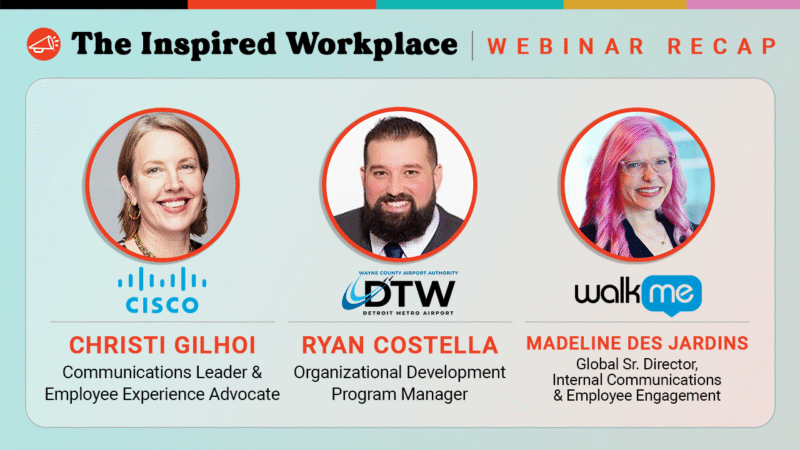
From AI-driven workplaces to global hybrid teams, one thing hasn’t changed: people want to feel seen. In this conversation with leaders from Cisco, WalkMe, and Wayne County Airport Authority, we explored what makes recognition meaningful—and what makes it scalable.

Read More
WorkProud Bullhorn

Get The Inspired Workplace Monthly Newsletter

Ray-Ban Meta Wayfarer Smart Glasses Matte Black/Clear-Graphite Green Transitions

Product Details

An icon of style from Hollywood to hip-hop, the Wayfarer never stands still. Forever embraced by the next generation of culture makers, now its journey continues with AI-enhanced wearable tech. Ray-Ban Meta Wayfarer enables you to live in the moment and share how you see the world. Listen, call, capture and livestream features are seamlessly integrated within the classic frame. Eye size: 50; Frame: Matte Black; Lens: Clear/Graphite Green Transitions; Lens Material: Standard Plastic

Specifications

Color: Matte Black/Clear-Graphite Green Transitions

United States

A
Afghanistan
Albania
Algeria
Andorra
Angola
Antigua & Deps
Argentina
Armenia
Australia
Austria
Azerbaijan
B
Bahamas
Bahrain
Bangladesh
Barbados
Belarus
Belgium
Belize
Benin
Bhutan
Bolivia
Bosnia Herzegovina
Botswana
Brazil
Brunei
Bulgaria
Burkina
Burundi
C
Cambodia
Cameroon
Canada
Cape Verde
Central African Rep
Chad
Chile
China
Colombia
Comoros
Congo
Congo {Democratic Rep}
Costa Rica
Croatia
Cuba
Cyprus
Czech Republic
Denmark
D
Djibouti
Dominica
Dominican Republic

E
East Timor
Ecuador
Egypt
El Salvador
Equatorial Guinea
Eritrea
Estonia
Ethiopia

F
Fiji
Finland
France

G
Gabon
Gambia
Georgia
Germany
Ghana
Greece
Grenada
Guatemala
Guinea
Guinea-Bissau
Guyana

H
Haiti
Honduras
Hungary

I
Iceland
India
Indonesia
Iran
Iraq
Ireland {Republic}
Israel
Italy
Ivory Coast

J
Jamaica
Japan
Jordan

K
Kazakhstan
Kenya
Kiribati
Korea North
Korea South
Kosovo
Kuwait
Kyrgyzstan

L
Laos
Latvia
Lebanon
Lesotho
Liberia
Libya
Liechtenstein
Lithuania
Luxembourg

M
Macedonia
Madagascar
Malawi
Malaysia
Maldives
Mali
Malta
Marshall Islands
Mauritania
Mauritius
Mexico
Micronesia
Moldova
Monaco
Mongolia
Montenegro
Morocco
Mozambique
Myanmar

M
Namibia
Nauru
Nepal
Netherlands
New Zealand
Nicaragua
Niger
Nigeria
Norway

O
Oman

P
Pakistan
Palau
Panama
Papua New Guinea
Paraguay
Peru
Philippines
Poland
Portugal

Q
Qatar

R
Romania
Russian Federation
Rwanda

S
St Kitts & Nevis
St Lucia
Saint Vincent & the Grenadines
Samoa
San Marino
Sao Tome & Principe
Saudi Arabia
Senegal
Serbia
Seychelles
Sierra Leone
Singapore
Slovakia
Slovenia
Solomon Islands
Somalia
South Africa
South Sudan
Spain
Sri Lanka
Sudan
Suriname
Swaziland
Sweden
Switzerland
Syria

T
Taiwan
Tajikistan
Tanzania
Thailand
Togo
Tonga
Trinidad & Tobago
Tunisia
Turkey
Turkmenistan
Tuvalu

U
Uganda
Ukraine
United Arab Emirates
United Kingdom
Uruguay
Uzbekistan

V
Vanuatu
Vatican City
Venezuela
Vietnam

Y
Yemen

Z
Zambia
Zimbabwe

Please Fill Out the Form

Here you will find insights curated for leadership seeking in-depth industry knowledge. Explore comprehensive studies, helpful guides, and expert white papers.

*By selecting “VIEW RESOURCES,” you agree to WorkProud’s Privacy Policy. You may unsubscribe from our emails at any time. Please note when unsubscribing: it may take up to 10 business days for your request to take effect.