


Your 10-year anniversary employee got a points deposit and a templated email. No one else in the organization saw it. The letter had the wrong name. And you found out three days later when they mentioned it to their manager.
That’s not a technology problem. That’s what happens when milestone programs are built to process recognition rather than deliver it.
There are 4 things a milestone automation platform needs to get right — not just operationally, but culturally. Most platforms get one or two. Here’s what all four look like, and why they matter.
Employees who’ve been with you for 10 years can tell the difference between a celebration and a checkbox. A points drop and a templated email is a checkbox. A branded, values-tagged post in the company feed — with a personal message from their manager and comments from their team is a celebration.
When every milestone award requires executive sign-off before it goes out, recognition arrives late. Or not at all. Employees notice. The fix isn’t removing oversight it’s configuring budget thresholds and approval tiers upfront so standard milestones run automatically, and only true exceptions surface for review.
Getting the award to the right person on the right date is the baseline. The harder problem is making the milestone feel like an event. When a 5-year anniversary is processed quietly in the background, the employee experienced a notification. Not a celebration. Milestones need to surface publicly with peer comments, values tags, and leadership messages to carry the weight they’re supposed to.
“We sent 400 anniversary awards last quarter” doesn’t protect budget. Milestone participation rates, peer engagement by tenure cohort, and award redemption trends — segmented by department and geography do. Your HRIS can give you the list of milestones. It can’t tell you whether any of them landed.
WorkProud is a unified employee recognition and culture platform built to handle all four. Below is exactly how each one works — and what it looks like for the HR Program Owner who’s been managing milestones out of a spreadsheet and a prayer.
Most milestone automation was designed to solve an operations problem, not a culture problem. The system fires on the right date. The points land. The email goes out. And the employee feels nothing in particular.
A recognition program leader at a major national nonprofit described the underlying issue directly: “As tenure increases, satisfaction with recognition and rewards decreases.” That’s the real cost of milestone automation done wrong. Your longest-tenured employees — the ones whose institutional knowledge and relationships are hardest to replace — are the ones most likely to feel like the program doesn’t see them. And they’re the ones most likely to leave quietly when they decide it’s time.
WorkProud’s Milestone Automation triggers branded, visually engaging celebrations tied to the employee’s specific milestone, their contributions, and your company’s values. Not a system alert. Not a generic congratulations. A moment that looks and feels like it came from your organization — because it did.
How it works: WorkProud pulls anniversary and birthday data from your HRIS and automatically generates a branded milestone post in the company-wide recognition feed on the right date. The post uses your colors, your program name, your messaging. Peers can comment. Managers can add a personal note. Leadership can weigh in. The employee doesn’t just receive an award — they receive a public moment that accumulates meaning throughout the day.
A 1-year anniversary and a 15-year anniversary shouldn’t produce the same experience. WorkProud lets you configure distinct milestone tiers — different post templates, different award values, different messaging prompts, different visibility rules — for each level:
Each tier is configured once. After that, WorkProud handles the triggering, the posting, and the award fulfillment automatically across every department, every geography, every time zone.
If a manager asks “What does our 10-year anniversary experience look like?”, the answer used to be: “We send them an email and some points, and I hope the letter is right.” In WorkProud, the answer is: pull up any 10-year anniversary post in the feed and show them exactly what it looks like because it’s the same every time.
Milestone configurations can be updated at any time by an assigned admin, without IT involvement. Changes take effect immediately for future milestones.

The biggest killer of milestone program participation isn’t employee apathy. It’s the approval process.Total Rewards Managers describe their weeks as “mostly chasing down sign-offs.” A VP is traveling. An executive hasn’t responded to the approval request. Three 5-year anniversaries are sitting in a queue, and the employees’ milestone dates have already passed. The awards go out late or they don’t go out at all. And the employees who were supposed to feel celebrated feel overlooked instead.
The goal isn’t to eliminate oversight. It’s to stop requiring manual approval for awards that were always going to be approved. WorkProud’s budgeting configuration lets you set the rules once budget thresholds by milestone tier, eligibility criteria, approval tiers for exceptions so standard milestones run automatically within those parameters. Only true exceptions route to an approver: awards above a set value, employees in specific roles, or milestones flagged for custom handling. Everything else runs on schedule, without anyone touching it.
Three questions HR Program Owners should be able to answer at a glance and can, inside WorkProud:
When an employee says “I never received my anniversary award,” HR can pull the exact record in seconds: when it triggered, what was issued, whether it was redeemed, what the employee selected. No support ticket. No back-and-forth with a vendor. The full audit trail lives inside WorkProud, accessible to your admin team directly.
That traceability also means milestone errors — wrong letters, incorrect award values, missed anniversaries — become visible and fixable before they reach employees, not after. HR stops being the last line of defense and starts being the person who built a system that catches problems automatically.
Budgeting rules are configured once during program setup. After that, standard milestones run automatically, and exceptions surface in the admin dashboard so HR is only spending time on the things that actually need attention.

Getting the award to the right person on the right date is the baseline. Most platforms can do that. The harder problem is making the milestone feel like something the organization actually noticed.
If your CHRO asked: “Can you show me what a 5-year anniversary looks like for one of our frontline employees in the Chicago distribution center?” — what would you pull up?
For most HR teams, the honest answer is: a points deposit record and a templated email that no one else in the organization saw. The employee received a transaction. Not a celebration.
WorkProud’s Recognition Feed changes that. When a milestone triggers, it automatically generates a branded Celebration post in the feed — visible to the employee’s team, their community, and the broader organization depending on your visibility settings. Peers react. Managers comment. Leadership adds a personal message. The post becomes a living record of the milestone that accumulates engagement throughout the day, without HR orchestrating any of it.
When your CHRO asks what a 5-year anniversary looks like, you pull up the feed post: the branded celebration, the values tag, the peer comments, the manager message, the award redemption status. That’s the full picture, in one place, in under 30 seconds.
A 20-year anniversary for a senior leader gets a different treatment. WorkProud surfaces a milestone post with a custom long-tenure post template, a prompt for executive leadership to add a personal message, and visibility set to the entire organization. The whole company sees it not just the employee and their direct manager.
WorkProud lets you build Custom Post Types for each anniversary tier configured once, triggered automatically. Each carries its own visual design, messaging prompts, values tags, and visibility settings.
A 1-year anniversary post looks different from a 10-year anniversary post because they should. The employee finishing their first year deserves a warm welcome into the culture. The employee finishing their tenth deserves a moment that reflects a decade of contribution. Those aren’t the same moment, and the platform shouldn’t treat them as if they are.
Posts can be searched and filtered by post type and milestone tier so HR can see exactly how many 5-year, 10-year, and 20-year anniversaries were celebrated this quarter, and what peer engagement looked like for each one.
You can read more about how WorkProud’s recognition feed and post types work in our platform walkthrough.
Milestones that run reliably and feel meaningful that’s the operational goal. But at some point, your CHRO or CFO will ask what the milestone program is actually doing for the business.
“We sent 400 anniversary awards last quarter” doesn’t answer that question. It doesn’t protect budget. It doesn’t justify program expansion. It doesn’t connect recognition activity to the retention numbers leadership is watching.
Milestone data is retention data but only if you can surface it in a way that tells a story. When you can show that employees in the 5–10 year tenure cohort have 73% milestone engagement, and that cohort also shows the lowest voluntary attrition in the organization, you’ve connected a recognition program to a business outcome. That’s a QBR slide. That’s the difference between “we run a recognition program” and “our recognition program is reducing attrition in our highest-value tenure band.”
Your HRIS can give you the list of milestones. It can’t tell you whether any of them landed whether peers engaged with the post, whether the employee redeemed their award, whether the social moment was visible or buried. That behavioral data only exists inside the recognition platform.
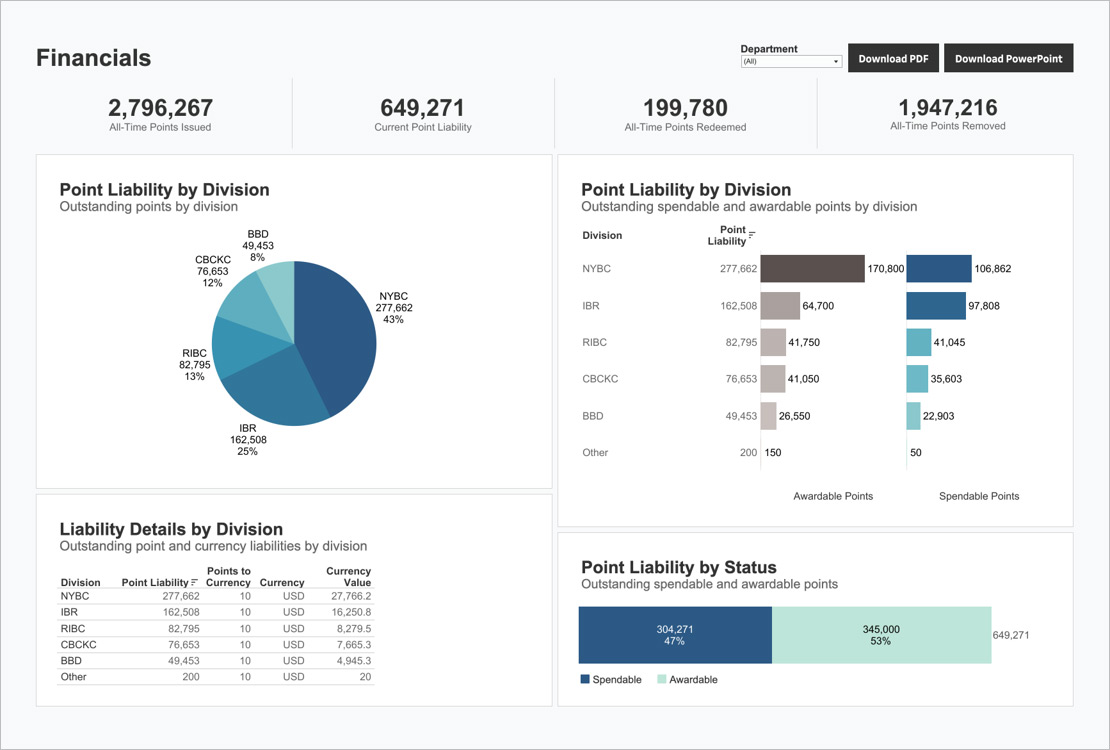
WorkProud keeps milestone activity, award history, peer engagement, and redemption data in one place filterable by department, tenure tier, geography, and time period. No manual exports. No stitching together three spreadsheets before a quarterly review. No guessing whether the program is reaching the employees who need it most.
It also means problems surface early. A department where milestone participation is low. A tenure cohort where award redemption rates are dropping. A region where milestones are triggering but peer engagement is zero. Those are signals and they’re only visible if the data is in one place.
If your milestone program is running on spreadsheets, approval chains, and templated emails — and your tenured employees are the ones most likely to feel overlooked — request a demo focused on milestone automation. We’ll show you what a program that runs reliably and feels meaningful actually looks like.
You can also read about how four companies used WorkProud to measurably improve retention in our employee retention software guide, or explore the full platform in our recognition platform walkthrough.

Sample